English
 Español



DPOWER ELECTRONIC
DPOWER ELECTRONIC
DPOWER ELECTRONIC
DPOWER ELECTRONIC
DPOWER ELECTRONIC
DPOWER ELECTRONIC
How PFC (Power Factor Correction) Improves Energy Efficiency in 48V Fast Chargers
 Home / News / Industry News / How PFC (Power Factor Correction) Improves Energy Efficiency in 48V Fast Chargers
Oct 26, 2026
48V lithium battery systems now power electric bicycles, drones, automated guided vehicles (AGVs), and electric tools. Fast charging these packs pushes charger output to 10 A or even 60 A, so a single charger can draw substantial power from the AC mains. How well that AC power is converted determines the energy efficiency and operating cost of charging. Power factor correction (PFC) is one of the most effective ways to improve energy efficiency in 48V fast chargers.
Power factor is the ratio of real power to apparent power in an AC circuit. Real power performs useful work, such as charging a battery, while apparent power is the total power drawn from the grid. In an ideal system the ratio equals 1.0. In real AC-DC chargers, the power factor is often between 0.6 and 0.8 unless corrective circuitry is built in.
Two factors lower the power factor of a charger: a phase shift between voltage and current, and harmonic distortion from the input rectifier. A conventional charger uses a diode bridge and a large bulk capacitor, so input current flows only near the peak of the AC sine wave. This raises the RMS current for the same real power and causes extra heating in wiring and transformers. PFC reshapes the input current into a smooth sine wave in phase with the voltage, so more energy reaches the battery stage and less is wasted.
48V lithium battery packs are common in electric bicycles, scooters, cleaning machines, and industrial AGVs. Fast charging these packs means high input power at the AC outlet. Without PFC, a 1200 W charger draws noticeably more current than its nameplate suggests, pushing circuit breakers toward their limits and heating extension cables.
| Parameter | Without PFC | With Active PFC |
|---|---|---|
| Power factor | approx. 0.65 | 0.98 or higher |
| Input current at 230 V | approx. 8.0 A | approx. 5.3 A |
| Apparent power drawn | approx. 1846 VA | approx. 1224 VA |
| Harmonic current | High | Low |
| Energy lost in input wiring | Higher | Lower |
The same 48V fast charger delivers the same DC charge power in both cases, but active PFC draws about one-third less current from the wall. The difference grows when several chargers operate together in a charging room or at a fleet depot.
The most direct efficiency benefit comes from reducing input current. Conductive losses in cables, connectors, and breakers scale with the square of the current. Cutting input current from roughly 8.0 A to 5.3 A reduces these wiring losses by about 55 percent. Lower current also means less voltage drop, so the charger sees a more stable input voltage and the DC-DC stages work more efficiently.
PFC also reduces reactive current, which does not charge the battery but still loads transformers and switchgear. By bringing the power factor close to unity, a 48V fast charger with active PFC makes better use of existing infrastructure. Facility operators can install more chargers on the same feeder or use smaller cabling for a new charging area.
Lower harmonic current also reduces heating in neutral conductors and lowers stress on capacitors and magnetic components. A cooler-running charger is more predictable, maintains its rated fast-charging current under sustained load, and lasts longer.
Battery chargers implement PFC in two ways: passive and active. Passive PFC uses inductors and capacitors to improve the input current shape. It is simple and inexpensive but limited to a power factor between 0.7 and 0.85. For small chargers below 75 W it is acceptable, but for fast charging at 48V, where power reaches several hundred watts or more, it is not enough.
Active PFC uses a boost converter between the bridge rectifier and the bulk capacitor. A control loop forces the input current to follow the voltage waveform, achieving a power factor of 0.95 to 0.99. Active PFC also keeps the DC bus stable across a wide input range. This is why modern high-power lithium battery chargers pair active PFC with resonant topologies such as LLC.
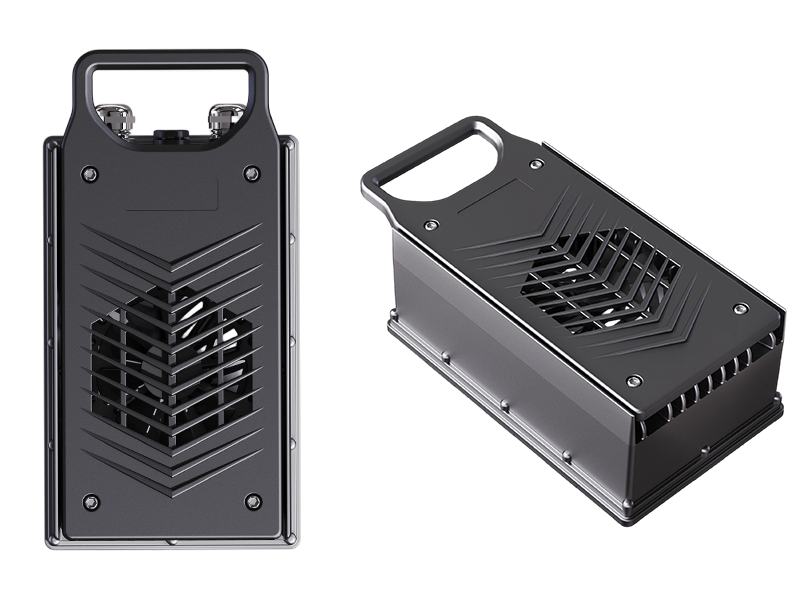 High Power Lithium Battery Charger with Active PFCThis charger suits high-power 48V fast charging applications where active PFC keeps input current clean and the DC bus stable, making it a practical choice for electric transport and energy storage.View Product →
PFC produces four practical benefits for 48V fast charging operations:
Less wasted current lowers electricity consumption and reduces peak demand.
Less heat wasted in the electrical path means fewer emissions per charge.
Existing circuits support more chargers without costly upgrades.
Stable input behavior reduces thermal derating and keeps charging current consistent.
For a fleet operator running dozens of 48V fast chargers, the difference between a power factor of 0.65 and 0.98 adds up quickly. Input current drops, cooling load decreases, and the chargers spend less time in thermal protection. Over a year, the impact on electricity bills and equipment lifetime is significant. Chargers in this voltage class can be evaluated directly against these four criteria.
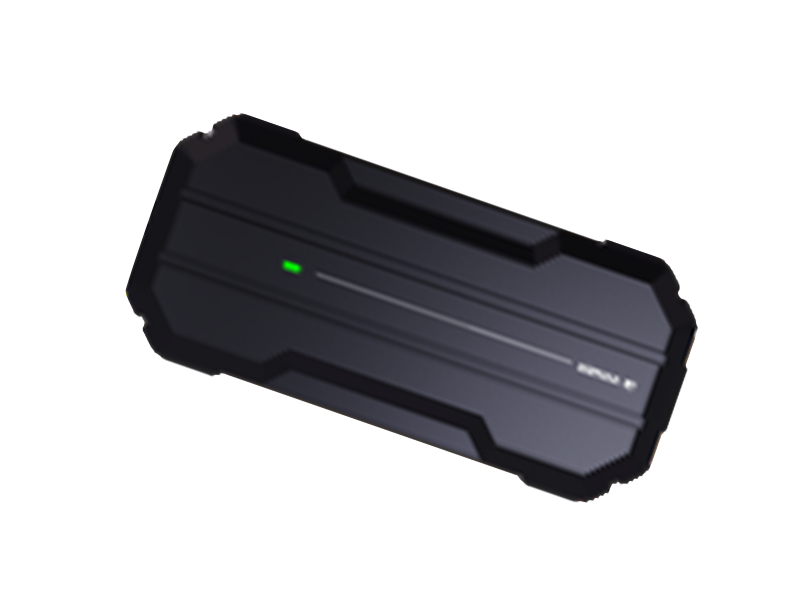 48V & 52V Fast Charger with Smart ProtectionEvaluate this charger for fleet or personal use based on high power factor, efficiency above 90 percent, harmonic compliance, and nine-layer safety protections that support reliable fast charging.View Product →
When selecting a 48V fast charger, check the power factor at full load. A good active-PFC charger maintains a power factor of 0.95 or higher across most of the load range, with conversion efficiency above 90 percent. It should also comply with harmonic limits such as EN 61000-3-2 and carry the certifications for the target market, for example CE, UL, FCC, or KC.
It is equally important to match the charger to the battery. The charging profile, voltage window, connector, and communication interfaces should fit the specific lithium chemistry and the application's duty cycle. Drone fleets, AGV operations, and e-mobility have different requirements, and a manufacturer that supports OEM and ODM customization can adapt the product instead of forcing a compromise.
These criteria are connected to the overall charger architecture. The technical discussion of what makes a 48V/52V lithium battery charger suitable for fast charging explains these points in detail. Reviewing the input stage, thermal design, and compliance together gives a much better picture of long-term efficiency.
48V/54.6V Lithium Battery Charger Supplier OptionThis supplier listing helps you connect charger selection with input-stage and thermal design considerations, so you can compare 48V fast-charging solutions that maintain rated output under load.View Product →PFC does not directly change the charging algorithm, which is controlled by the CC/CV profile. It does, however, help the charger draw clean power from the grid and maintain rated output without overheating, so fast charging is less likely to be interrupted by input-side faults.
In most markets, equipment above roughly 75 W must comply with harmonic limits such as EN 61000-3-2. A 48V fast charger usually operates at several hundred watts or more, so active PFC is effectively necessary to meet compliance targets and achieve the efficiency expected from commercial charging equipment.
Look for a power factor of at least 0.95 at full load, and preferably 0.98 or higher with active PFC. Because a charger spends part of its cycle at reduced load, check the power factor at partial load as well.
Power factor correction is a fundamental part of efficient AC-DC conversion in 48V fast chargers. It lowers input current, reduces thermal losses, and keeps the charger within grid regulations, all of which improve energy efficiency. When evaluating a fast charging solution for 48V lithium battery equipment, ask for the power factor curve, not just the output specification. That difference shows up in electricity bills, charger lifetime, and how many chargers the existing infrastructure can support.

 No.18-9 Zhang Hong Road ,Huishan District,Yanqiao Street,Wuxi City,Jiangsu Province,China
 +86-510-83138966
 [email protected]
TALK TO US
Copyright © Wuxi Dpower Electronic Co., Ltd. All Rights
Reserved.
Custom Smart Lithium Battery Charger Manufacturer