English
 Español



DPOWER ELECTRONIC
DPOWER ELECTRONIC
DPOWER ELECTRONIC
DPOWER ELECTRONIC
DPOWER ELECTRONIC
DPOWER ELECTRONIC
36V 10S Lithium-Ion Chargers: How to Calculate the Correct Peak Voltage (42V)
 Home / News / Industry News / 36V 10S Lithium-Ion Chargers: How to Calculate the Correct Peak Voltage (42V)
Oct 19, 2026
If you own or design equipment powered by a 36V lithium-ion battery, you have probably seen chargers labelled 42V and wondered whether they are actually a match. They are: a 36V pack is almost always built as a 10S configuration, meaning ten cells connected in series, and the standard charging limit for each lithium-ion cell is 4.2V. Multiply the two numbers and you get 42.0V, the correct peak voltage for the pack. This article explains the calculation in full, shows why 42V is both a ceiling and a target during charging, and outlines what to look for when selecting a 36V lithium-ion charger.
Lithium-ion cells are rated by two important voltages. The nominal voltage, usually 3.6V or 3.7V, reflects the average level while the cell is discharging. The charge limit voltage, also called the peak or cut-off voltage, is 4.2V for standard cells and represents the maximum the cell can safely absorb.
In battery notation, 10S means ten cells in series. Series connections add voltage, while parallel connections add capacity. Ten cells at a 3.6V nominal level produce 36V, which is why the pack is marketed as a 36V battery. Some 10S packs are labelled 37V because their cells carry a 3.7V nominal rating, but the peak voltage is identical for both: 10 x 4.2V = 42V.
The same logic applies across all common lithium-ion configurations. The table below compares several popular pack sizes used in e-bikes, scooters, drones and power tools.
| Configuration | Cells in Series | Nominal Voltage | Peak Charge Voltage |
|---|---|---|---|
| 7S | 7 | 25.2V - 25.9V | 29.4V |
| 10S | 10 | 36.0V - 37.0V | 42.0V |
| 13S | 13 | 46.8V - 48.1V | 54.6V |
| 14S | 14 | 50.4V - 51.8V | 58.8V |
The formula is simple and works for every standard lithium-ion pack:
Follow these four steps to confirm the correct charger voltage for your battery:
If your measurement lands well outside this range, either the charger is not matched to the pack or the battery itself needs attention.
Lithium-ion charging uses a two-stage profile called constant current / constant voltage (CC/CV). During the first stage the charger delivers a fixed current while the pack voltage climbs from roughly 30V towards 42V. Once the pack reaches 42V, the charger switches to constant voltage: the voltage stays fixed at 42V while the current gradually tapers down. Charging ends when the current drops to a low threshold, typically around 5% of the rated charging current.
The constant current phase does the bulk of the work. The charger limits the current to a safe level while the pack voltage rises naturally. For a 10S pack, the voltage curve moves from the depleted level up to 42V, and the BMS monitors each cell group to keep them balanced.
Once 42V is reached, the current begins to taper. This phase prevents overvoltage while still topping up the cells to full capacity. A charger that terminates too early leaves energy unused; one that never terminates risks pushing the pack into an overcharged state.
Even experienced riders and workshop managers occasionally grab the wrong charger. The most frequent mistakes are:
If a previously reliable charger begins cutting off early, fails to reach 42V, or behaves erratically, do not continue using it until the fault is diagnosed. Our guide to why a 36V charger fails covers the most common causes and how to identify them.
A reliable 36V charger should meet several criteria beyond the obvious 42V output:
For e-bikes, scooters, drones and power tools, a charger engineered specifically for a 10S lithium-ion pack is the safest choice. It should be built around a 42V output, a clean CC/CV curve and robust protection circuitry, while meeting the compliance standards of the region where the final product is sold.
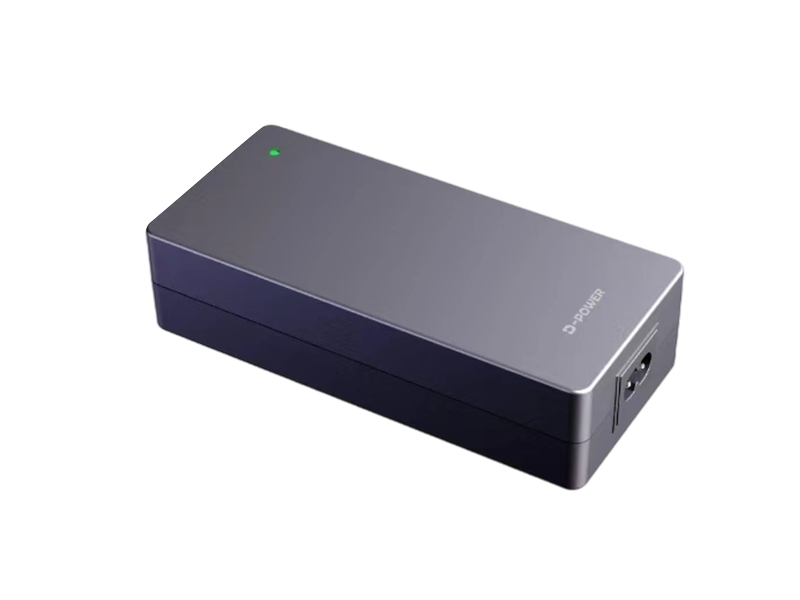 36V 10S Lithium-Ion Battery Charger with 42V OutputThis charger is designed for 10S lithium-ion packs found in e-bikes, scooters, and power tools, providing a 42V CC/CV output with protections and optional communication protocols.View Product →
No. Even if the voltage label looks similar, lead-acid chargers use a different profile and may float above 42V or produce high ripple. Use a charger designed specifically for lithium-ion 10S packs.
36V is the nominal voltage of a 10S pack, while 42V is its maximum charge voltage. The charger is rated at 42V because that is the exact point where the pack must stop absorbing energy.
Not necessarily. Small deviations caused by charger tolerance and BMS thresholds are normal; any value between 41.5V and 42.0V is acceptable. If charging stops far below that range, inspect both the charger and the battery.
No. Some chemistries, such as lithium iron phosphate (LiFePO4), charge to only 3.65V per cell. Always check the cell datasheet. The formula remains the same: series cells x per-cell charge limit equals the pack peak voltage.
Calculating the correct peak voltage for a 36V 10S lithium-ion pack comes down to one equation: 10 x 4.2V = 42V. Keeping this value in mind protects your cells, preserves capacity and extends battery service life. When you are ready to select a charger for your project, work with a lithium battery charger manufacturer that understands both the voltage calculation and the charging algorithm behind it. That combination is what makes power delivery safe, efficient and compliant.

 No.18-9 Zhang Hong Road ,Huishan District,Yanqiao Street,Wuxi City,Jiangsu Province,China
 +86-510-83138966
 [email protected]
TALK TO US
Copyright © Wuxi Dpower Electronic Co., Ltd. All Rights
Reserved.
Custom Smart Lithium Battery Charger Manufacturer