English
  Español


DPOWER ELECTRONIC
DPOWER ELECTRONIC
DPOWER ELECTRONIC
DPOWER ELECTRONIC
DPOWER ELECTRONIC
DPOWER ELECTRONIC
Smart Lithium Battery E-Motorcycle Charger: A Comprehensive Technical Guide for High-Performance Electric Mobility
 Home / News / Industry News / Smart Lithium Battery E-Motorcycle Charger: A Comprehensive Technical Guide for High-Performance Electric Mobility
Content
Jul 12, 2026
As the global landscape of transportation shifts towards sustainable energy solutions, the electric motorcycle has emerged as a pivotal player in reducing carbon footprints while maintaining high performance. At the heart of this transformation lies the Smart Lithium Battery E-Motorcycle Charger, a sophisticated piece of electronics that does far more than simply transfer power. Unlike smaller personal mobility devices, electric motorcycles often operate at significantly higher voltages to achieve the necessary torque and speed for highway travel. Consequently, an e-motorcycle charger must be engineered to handle these elevated power demands with precision. This article provides a comprehensive technical analysis of Smart Lithium Battery E-Motorcycle Charger technology, exploring its voltage compatibility, durability requirements, communication protocols, and the critical factors that distinguish high-performance chargers from standard alternatives. For e-motorcycle manufacturers, fleet operators, and performance enthusiasts seeking to make informed decisions about charging equipment, understanding the nuances of these advanced systems is essential for maximizing vehicle range, ensuring rider safety, and prolonging battery lifespan.
Before delving into the specific characteristics and selection criteria of e-motorcycle chargers, it is important to establish a clear understanding of what defines this essential device. A smart lithium battery e-motorcycle charger is a specialized power electronics device designed to safely and efficiently recharge the high-capacity battery packs used in electric motorcycles. Unlike standard e-bike chargers, these units are engineered for higher voltage systems, typically ranging from 72V to 96V or higher, and are capable of delivering significantly more power to accommodate the larger battery capacities required for highway-speed travel.
The "smart" designation indicates that the charger incorporates advanced communication protocols such as CAN BUS or RS485, enabling seamless data exchange between the charger and the motorcycle's Battery Management System (BMS). This dialogue allows the charger to receive real-time data regarding cell voltage, temperature, and state of charge, enabling it to adjust charging parameters dynamically for optimal efficiency and safety.
Compared to standard e-bike chargers or generic power supplies, a purpose-built smart lithium battery e-motorcycle charger offers several distinct advantages. The charger delivers the precise voltage and current profile required by high-performance lithium battery packs. It incorporates industrial-grade protections with enhanced thresholds for over-voltage, over-current, and short-circuit protection. The charger features robust thermal management systems to handle the heat generated during high-power transfer. It includes communication capabilities that enable optimized charging curves and diagnostic capabilities.
Unlike smaller personal mobility devices, electric motorcycles often operate at significantly higher voltages to achieve the necessary torque and speed for highway travel. Consequently, an e-motorcycle battery charger must be engineered to handle these elevated power demands with precision. Typically ranging from 48V to 96V or higher, these chargers must match the specific chemistry and configuration of the lithium battery pack.
Ensuring the charger's output voltage corresponds to the series configuration of the battery pack is the first step in ensuring a reliable and safe riding experience. A 72V battery pack (typically 20S configuration) requires a charger with an output voltage of approximately 84V to reach full capacity. A 84V battery pack (24S) requires approximately 100.8V. Using a charger with incorrect voltage parameters can lead to inefficient charging cycles or, in severe cases, irreversible damage to the battery cells. The charger's output voltage must be precisely matched to the battery's nominal voltage and peak charge voltage.
High-current output options reduce charging time without compromising the thermal stability of the battery. The charging speed is primarily determined by the charger's output power and the battery's capacity. Higher voltage systems and off-board chargers generally facilitate faster charging compared to standard portable on-board units. Smart chargers with CAN BUS communication can dynamically adjust charging current based on BMS feedback, optimizing charge speed while maintaining safety.
Dedicated charge profiles for various lithium chemistries, including Li-ion and LiFePO4, are essential for proper battery management. Different lithium chemistries require different charging voltages and algorithms. A smart charger with programmable profiles can be configured to match the specific chemistry of the battery pack, ensuring optimal charging and extending battery life.
Electric motorcycles are designed to traverse a variety of terrains and weather conditions, from sun-scorched asphalt to rain-soaked streets. The charging equipment must be built to withstand these same environmental challenges.
A robust e-motorcycle battery charger is typically rated with a high Ingress Protection (IP) rating, safeguarding internal components against dust ingress and water jets. This durability is critical not only for the longevity of the charger itself but also for the safety of the user. Chargers designed for outdoor use or on-board applications should have a minimum IP54 rating, providing protection against dust and splashing water.
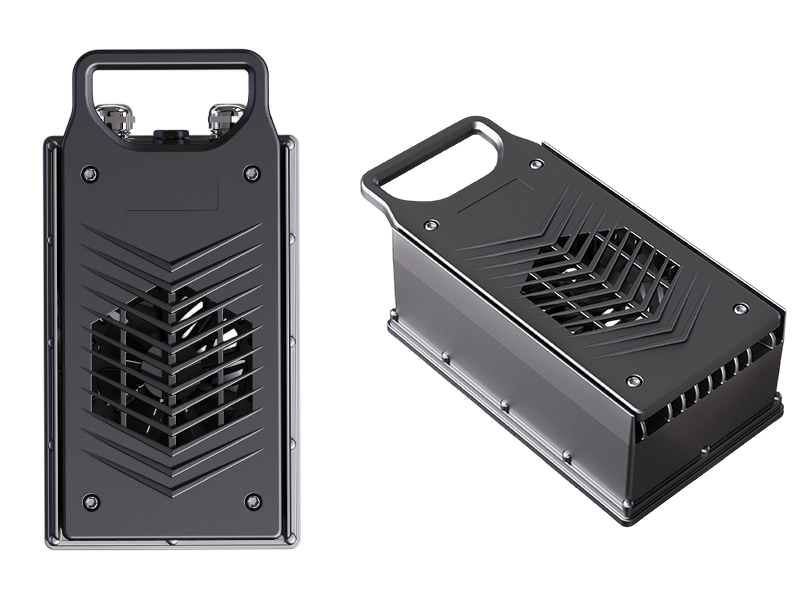
Manufacturers focus on thermal management systems, utilizing aluminum housings and advanced cooling designs to dissipate heat effectively during high-power charging sessions, thereby preventing overheating and ensuring consistent performance. Built-in sensors adjust current flow to maintain optimal operating temperatures. The thermal protection circuits automatically derate the current (reduce charging speed) when temperatures exceed safe limits, protecting both the charger hardware and the battery pack from thermal stress.
The design philosophy extends to the physical construction of the unit. Vibration resistance is a key consideration, as the charger may be mounted on board the vehicle or transported in luggage compartments where it is subjected to constant movement. Reinforced casings are designed to endure the vibrations associated with motorcycle travel, ensuring the charger remains a dependable tool throughout the vehicle's lifecycle.
When designing or maintaining an electric motorcycle fleet, one critical decision is the choice between on-board and off-board charging systems. An on-board charger is integrated directly into the motorcycle's chassis, offering the convenience of plugging into any standard AC outlet without carrying extra equipment. This is ideal for commuters who require flexibility. However, on-board chargers are limited by size and weight constraints, which can cap their power output.
Conversely, off-board chargers are external units that often provide higher power output, resulting in significantly faster charging times. These are commonly used in commercial settings or for high-performance racing applications where rapid turnaround is essential. While off-board units are generally heavier and more powerful, they offer the advantage of keeping the vehicle lighter during operation by removing the charging mass from the bike itself.
| Feature | On-Board Charger | Off-Board Charger |
|---|---|---|
| Portability | Integrated into the vehicle; no extra carrying required | External unit; requires separate transport or a fixed station |
| Charging Speed | Moderate (limited by space/heat constraints) | High (larger capacity for faster current delivery) |
| Weight Impact | Adds weight to the motorcycle | Zero weight impact on the motorcycle during riding |
| Convenience | High; charge anywhere with an AC plug | Lower; requires access to the specific charger unit |
Modern electric mobility demands smart energy management. A premium e-motorcycle battery charger often incorporates advanced communication protocols such as CAN BUS or RS485. These protocols allow for seamless data exchange between the charger and the Battery Management System.
Standard in high-end applications, CAN BUS provides robust, error-free communication for demanding environments. This enables the charger to receive real-time data regarding cell voltage, temperature, and state of charge, allowing it to adjust charging parameters dynamically. This smart charging capability optimizes efficiency and ensures that the battery is charged safely, preventing issues like over-voltage or thermal runaway.
Advanced chargers with communication capabilities allow users to track charging status and battery health via connected displays or apps. This provides riders and fleet managers with valuable insight into battery condition, enabling proactive maintenance and extending battery lifespan.
While all chargers serve the purpose of recharging batteries, the distinct design features of smart e-motorcycle chargers result in significant differences in performance, safety, and battery longevity. The following table provides a direct comparison to guide e-motorcycle manufacturers, fleet operators, and enthusiasts in selecting the appropriate charging solution.
| Feature | Smart E-Motorcycle Charger | Standard Charger |
|---|---|---|
| Communication Protocol | CAN BUS, RS485 (BMS integration) | Limited or no communication |
| Charging Profile | Programmable for different lithium chemistries | Fixed profile |
| Environmental Protection | High IP rating, shock/vibration resistant | Limited or no environmental protection |
| Thermal Management | Active cooling, temperature sensors | Basic or passive cooling |
| Voltage Range | 48V to 96V+ (high-voltage capable) | Limited to lower voltages |
| Safety Protections | Comprehensive OVP, OCP, SCP, reverse polarity, thermal | Basic protections |
| Ideal Applications | High-performance e-motorcycles, fleets, racing | Light electric vehicles, e-bikes |
For businesses involved in international trade and manufacturing, sourcing smart lithium battery e-motorcycle chargers from a reliable supplier is paramount. Exporters should prioritize suppliers with a proven track record and established credentials, such as those with extensive industry experience, advanced manufacturing facilities, and comprehensive quality control systems.
Key quality parameters to consider when evaluating smart lithium battery e-motorcycle chargers include:
The smart lithium battery e-motorcycle charger represents a critical component in the electric mobility ecosystem, directly influencing battery lifespan, safety, and vehicle performance. The combination of high-voltage compatibility, intelligent communication, robust environmental protection, and advanced safety features makes purpose-built smart chargers an essential investment for e-motorcycle manufacturers, fleet operators, and performance enthusiasts.
For e-motorcycle manufacturers, fleet operators, and performance enthusiasts, understanding the unique advantages and specifications of smart lithium battery e-motorcycle chargers is essential for informed selection. By choosing high-quality chargers from reputable manufacturers, businesses and consumers can ensure the safety, reliability, and longevity of their electric motorcycles while achieving optimal performance on the open road.
The charging speed is primarily determined by the charger's output power and the battery's capacity. Higher voltage systems and off-board chargers generally facilitate faster charging. The Battery Management System also plays a critical role; it may limit the incoming current to protect the battery cells from overheating.
It is generally not recommended to use a car charger for an electric motorcycle unless the voltage and chemistry are perfectly compatible and the connector is standardized. Electric motorcycles often have different battery management requirements and voltage levels compared to electric cars. Using an incompatible charger could bypass the motorcycle's BMS safety protocols, leading to potential damage or safety hazards.
Extreme temperatures can significantly impact charging efficiency and safety. In very cold conditions, the internal resistance of the battery increases, which can lead to slower charging. Conversely, high ambient temperatures can cause the charger to overheat. A high-quality charger includes thermal protection circuits that automatically reduce charging speed when temperatures exceed safe limits.
On-board chargers are integrated into the motorcycle, offering convenience for charging anywhere with an AC plug, but are limited by size and weight constraints. Off-board chargers are external units that provide higher power output for faster charging but require separate transport or fixed stations.
Smart e-motorcycle chargers typically use CAN BUS or RS485 protocols to communicate with the Battery Management System. These protocols allow for seamless data exchange regarding cell voltage, temperature, and state of charge, enabling dynamic adjustment of charging parameters for optimal efficiency and safety.
1. Dpower. (2026). Smart Lithium Battery E-Motorcycle Charger Product Specifications. Dpower Product Catalog.
2. Texas Instruments. (2024). E-Bike and E-Motorcycle Charger Reference Design. TI Technical Document.
3. U.S. Consumer Product Safety Commission. (2024). Guidance on Safe Charging for Electric Vehicles. CPSC Publication.
4. International Organization for Standardization. (2022). ISO 9001: Quality Management Systems - Requirements. ISO Standards.
5. European Committee for Standardization. (2021). EN 60335-2-7: Safety of Household and Similar Electrical Appliances. CEN Standards.

 No.18-9 Zhang Hong Road ,Huishan District,Yanqiao Street,Wuxi City,Jiangsu Province,China
 +86-510-83138966
 [email protected]
TALK TO US
Copyright © Wuxi Dpower Electronic Co., Ltd. All Rights
Reserved.
Custom Smart Lithium Battery Charger Manufacturer