English
 Español



DPOWER ELECTRONIC
DPOWER ELECTRONIC
DPOWER ELECTRONIC
DPOWER ELECTRONIC
DPOWER ELECTRONIC
DPOWER ELECTRONIC
Temperature Compensation in 48V Lithium Chargers: What It Is & Why It Matters
 Home / News / Industry News / Temperature Compensation in 48V Lithium Chargers: What It Is & Why It Matters
Content
Nov 23, 2026
Temperature compensation is one of the most misunderstood charging concepts. On a lead-acid charger, it means adjusting the output voltage as the battery heats up or cools down. On a 48V lithium charger, however, the same term points to temperature-based protection rather than a voltage offset. This article explains what temperature compensation in 48V lithium chargers really means and why it matters for battery safety and service life.
Temperature compensation comes from lead-acid charging. Battery chemistry responds to temperature: cold slows the chemical reaction, heat accelerates it. To avoid overcharging or undercharging, a conventional charger changes its charge voltage according to the battery temperature. This is usually expressed as a negative coefficient in millivolts per degree Celsius. For example, a 12V lead-acid charger may reduce its output by about 18 mV for each degree above the 25°C reference point.
A 48V lithium battery behaves differently. Its charging profile is defined by the cell chemistry and the series configuration of the pack. A typical 48V pack has a fixed target voltage, and raising or lowering that voltage with temperature can be dangerous. Therefore, a modern 48V lithium charger does not simply copy the lead-acid compensation curve. Instead, it applies temperature compensation as a safety-related adjustment to the charging current or as a hard charging cutoff outside safe limits.
Lithium-ion cells are charged using a constant current/constant voltage profile. The charger supplies a constant current until the pack reaches its absorption voltage, then it holds that voltage while the current tapers. The absorption voltage is selected for the specific cell chemistry, such as NMC or LiFePO4, and is not meant to be changed with the ambient temperature. That is why lithium battery charging voltage is normally fixed in the charger firmware.
What does change with temperature is the safe current limit. The general industrial guideline is to charge lithium cells between 0°C and 45°C. Below 0°C, lithium ions slow down and can deposit as metallic lithium on the anode. This lithium plating causes permanent capacity loss and may create internal short-circuit risks. Above 45°C, the combination of high voltage and high temperature accelerates the decomposition of the electrolyte and can lead to thermal runaway.
Consequently, temperature compensation for lithium is not voltage compensation. It is temperature-aware control. Some chargers use a built-in temperature sensor, while larger systems communicate with the battery management system to obtain precise cell temperature and adjust the charging process in real time.
48V lithium batteries are common in e-bikes, electric scooters, golf carts, AGVs, and light electric vehicles. These packs contain high energy and can deliver high current. If the charger continues to push current at low temperature, the risk of lithium plating increases significantly. In a cold garage in winter, a 48V pack may be well below 0°C. A charger without temperature protection would start charging and silently damage the cells.
Heat is another danger. After a ride or a long discharge, the pack temperature may be elevated. Plugging a high-power charger into a hot battery can push individual cells beyond their safe operating range. Temperature-aware charging lets the charger react before damage occurs. It may reduce current, pause the charging cycle until the pack cools, or simply refuse to start until the temperature is acceptable.
This matters not only for safety but also for battery life. Repeated charging at low temperature causes capacity fade. Repeated charging at high temperature causes swelling and faster aging. A 48V lithium charger with proper temperature protection helps avoid both problems.
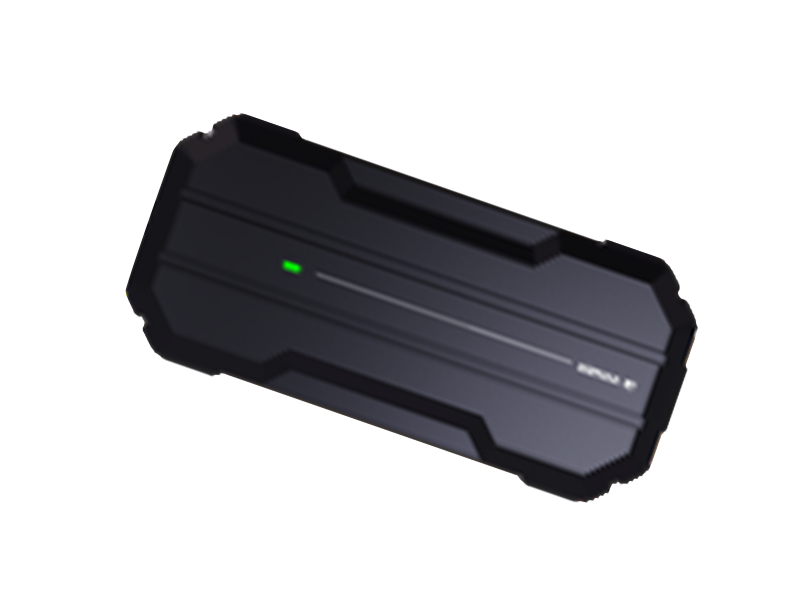 48V/52V Lithium Battery Charger with Smart Temperature ProtectionThis charger is ideal for e-bikes and scooters with 9-layer safety features, including overheating cutoff at 60°C. It prevents capacity fade and swelling by addressing temperature risks during charging.View Product →
In practice, temperature compensation in a 48V lithium charger is implemented through several mechanisms.
Instead of changing the voltage, the charger reduces the current as the pack temperature approaches the lower or upper limit. Lower current produces less internal heat and slows the electrochemical reactions, reducing the risk of plating and thermal stress.
If the battery temperature is below 0°C or above a maximum threshold, the charger stops charging altogether. Many lithium batteries have an internal BMS that also blocks charging in this condition, but the charger should not rely on the BMS alone.
In larger 48V systems, the charger may receive temperature data from the BMS through a communication link. This allows a more precise charging strategy based on cell temperature rather than a sensor mounted on the charger case.
| Battery Temperature | Charger Response | Reason |
| Below 0°C | Charging disabled or current limited | Prevents lithium plating |
| 0°C to 45°C | Normal CC-CV charging | Safe operating window |
| Above 45°C | Charging paused or derated | Avoids cell damage and thermal runaway |
Key point: For 48V lithium batteries, temperature compensation is not about raising or lowering the target voltage. It is about controlling the charging current and stopping charge outside the safe temperature window.
For demanding industrial applications, a high-power charger can shorten downtime while still protecting the pack through temperature monitoring.
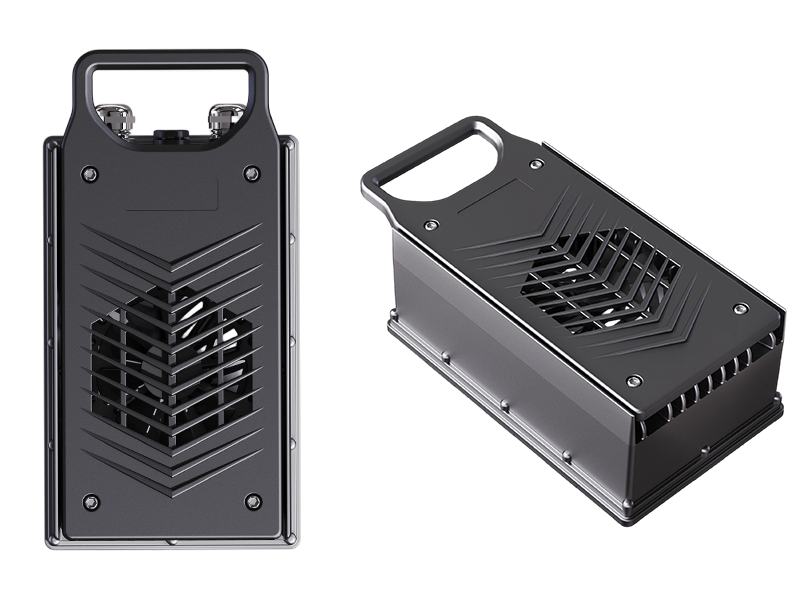 High Power Lithium Battery Charger for Industrial Fast ChargingA robust charger ranging from 500W to 6.6kW supports electric vehicles, stackers, and energy storage. It reduces downtime while monitoring temperature, which is crucial for demanding applications.View Product →
No. Lead-acid temperature compensation changes the charge voltage with temperature. A 48V lithium charger should use a fixed CC-CV voltage profile and control charge current or cut off charging based on temperature instead.
Standard lithium-ion and lithium iron phosphate batteries should not be charged below 0°C. Doing so may cause lithium plating, permanent capacity loss, and internal short circuits. Use a charger that stops or derates charging in these conditions.
Charging generates heat because of internal resistance and inefficiency. If the battery is already warm, the charger should reduce the current to keep the cells inside the safe operating range.
Yes. Even though it does not use a voltage slope like lead-acid, temperature-aware charging prevents harmful conditions that cause accelerated aging, capacity fade, and safety hazards.
Temperature compensation in 48V lithium chargers is not the same as in lead-acid models. It is a set of safety and control features that protect the battery from charging at extreme temperatures. For e-bikes, scooters, AGVs, and other 48V systems, this protection matters because it directly affects safety, cycle life, and charging reliability. When selecting a charger, look for one with temperature sensing, current derating, and a charging profile matched to your battery chemistry.

 No.18-9 Zhang Hong Road ,Huishan District,Yanqiao Street,Wuxi City,Jiangsu Province,China
 +86-510-83138966
 [email protected]
TALK TO US
Copyright © Wuxi Dpower Electronic Co., Ltd. All Rights
Reserved.
Custom Smart Lithium Battery Charger Manufacturer