

 English
 Español



DPOWER ELECTRONIC
DPOWER ELECTRONIC
DPOWER ELECTRONIC
DPOWER ELECTRONIC
DPOWER ELECTRONIC
DPOWER ELECTRONIC
Selecting Chargers for Heavy-Duty Outdoor Power Tools: Vibration and Dust Resistance
 Home / News / Industry News / Selecting Chargers for Heavy-Duty Outdoor Power Tools: Vibration and Dust Resistance
Content
Nov 16, 2026
Battery-powered outdoor tools have moved far beyond light household duty. Commercial mowers, brush cutters, chainsaws, and compact utility vehicles now depend on high-capacity lithium packs that must be charged reliably in difficult conditions. Selecting chargers for heavy-duty outdoor power tools requires more than matching volts and amps. It requires attention to vibration and dust resistance, because these are the two factors that most often shorten a charger’s working life on a job site.
A charger mounted on a machine, carried in a service vehicle, or stored near a dusty work area is exposed to continuous movement, fine particles, and temperature swings. If dust enters the enclosure or vibration cracks a solder joint, the charging process becomes unreliable. This guide explains what to evaluate when choosing a charger for heavy-duty outdoor power tools, with a focus on vibration and dust resistance.
Charging a lithium battery is a controlled process. The charger communicates with the battery management system, regulates current, and monitors voltage. If environmental stress interrupts that process, the battery can be undercharged, overcharged, or permanently damaged. In outdoor power equipment, two physical risks deserve special attention:
If a charger cannot survive the same vibration and dust exposure as the tool, the entire battery system becomes the weak link in the machine.
A standard household charger may work perfectly in a garage, but on a commercial mower or a utility terrain vehicle, the connector will be shaken thousands of times. Heavy-duty chargers should use locking connectors, strain relief, and sealed enclosures to keep the connection stable and the electronics clean.
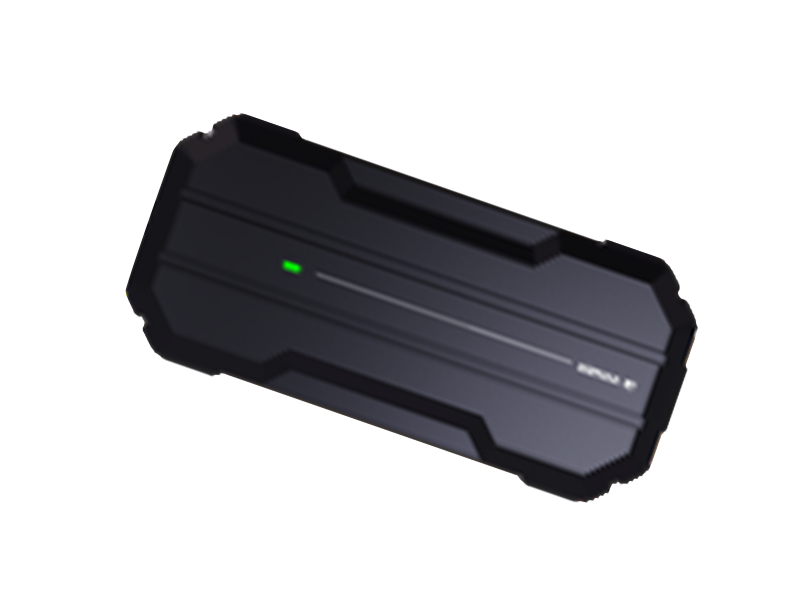 48V and 52V Lithium Battery Charger with Smart ProtectionThis charger matches 48V and 52V lithium packs for e-bikes, scooters, and small tools. It offers nine-layer safety features and auto-detects battery chemistry, making it a dependable choice for vibration-prone outdoor equipment.View Product →
The first electrical decision is voltage matching. If the battery pack is designed for 48V or 52V, the charger must be built for that nominal voltage. A mismatched charger can prevent the pack from reaching full charge, trigger the battery management system, or reduce cycle life. The same principle applies to 24V, 36V, and other lithium platforms used in heavy-duty outdoor tools.
Modern lithium chargers use a CC/CV profile: constant current until the cells reach a set voltage, then constant voltage while the current tapers. This profile depends on battery chemistry and the number of cells in series. For a deeper look at cell voltage ranges and charging profiles, see our guide to lithium battery charging voltage.
For larger outdoor machines, a 48V or 52V pack is common because it delivers more power for heavy cutting or driving tasks. A fast charger designed for that voltage range can keep the equipment running through long shifts without overshooting the battery's limits.
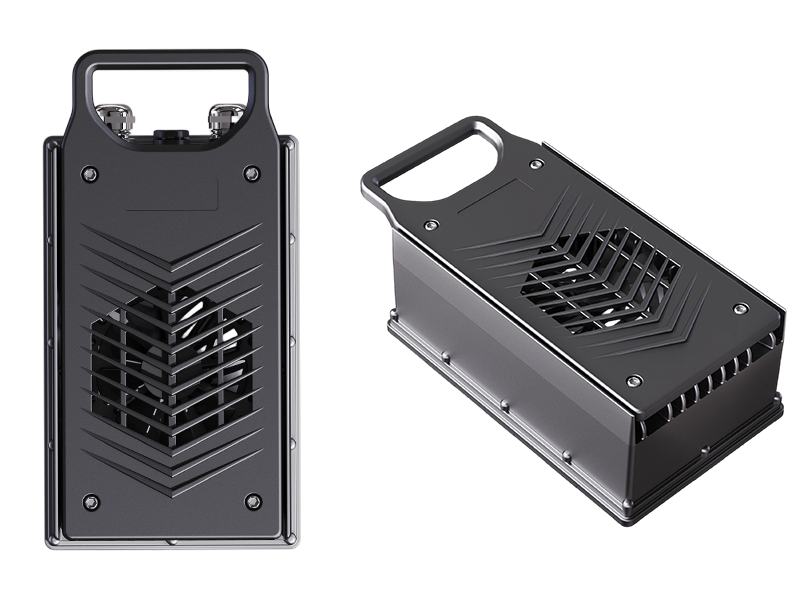 High Power Lithium Battery Charger for Fast RechargingDesigned for electric motorcycles, sightseeing vehicles, and industrial storage, this charger delivers higher wattage to recharge large packs quickly. It supports 48V and 52V platforms and suits commercial operations needing minimal downtime.View Product →
Charging current must match the battery capacity. A small battery can accept only a limited current, while a large pack requires higher current to recharge quickly. The required power also depends on the work schedule. A commercial operator cannot wait eight hours for a pack to refill. Fast charging is practical only when the battery's maximum charge rate and cooling system allow it.
High-power chargers are suited to equipment with larger packs, such as ride-on mowers, mini loaders, and utility vehicles. They can restore a battery in one to two hours, keeping the fleet available during a normal break. High power creates heat, so thermal design becomes a key part of the selection process. A charger that cannot shed heat in a dusty enclosure will shut down or degrade over time.
When calculating power, consider the pack’s capacity in amp-hours and the charger’s output current. The goal is to balance speed with battery stress. A charger that is too weak extends downtime; a charger that is too aggressive can cause heat-related damage.
The most important environmental specification for outdoor charging is the IP rating. IP stands for Ingress Protection. The first digit describes protection against solids, and the second digit describes protection against water. For dusty sites, the first digit should be 5 or 6. An IP65 charger is dust-tight and protected against low-pressure water jets. IP66 adds protection against powerful water jets and is often used in severe outdoor conditions.
| IP Rating | Dust Protection | Water Protection | Typical Use |
|---|---|---|---|
| IP54 | Limited dust ingress | Splashing water | Covered workshops |
| IP65 | Dust-tight | Low-pressure water jets | Outdoor tools |
| IP66 | Dust-tight | Powerful water jets | Severe outdoor duty |
IP rating alone is not enough. Check the cable entry point, connector locking mechanism, and whether the printed circuit board is coated or potted. Potting protects electronic components from vibration and prevents short circuits when moisture or dust enters the housing. This is especially important for chargers mounted directly on moving equipment.
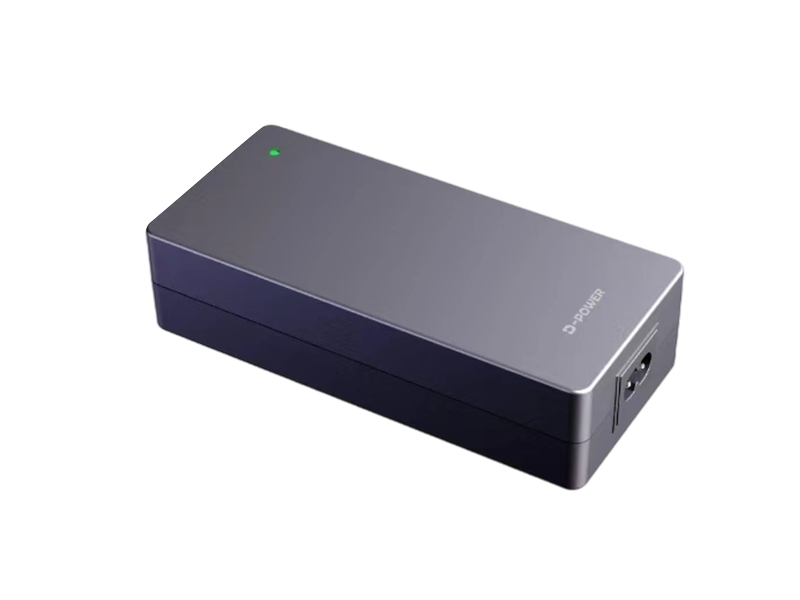 36V Lithium Charger with Durable Fanless DesignA compact 36V charger for scooters, e-bikes, lawn mowers, and power tools, this unit uses natural cooling to reduce moving-part failures. It includes reverse connection and temperature protection, ideal for space-constrained, dusty environments.View Product →
For medium-duty outdoor tools that already use a 36V platform, a compact charger can be integrated into the machine enclosure if the mechanical design uses sealed connectors and vibration-damped mounting. The 36V lithium charger is a good fit for applications where space is limited but dust and vibration cannot be ignored.
Heavy-duty charging generates heat, and heat accelerates component failure. A charger with a cooling fan may pull dusty air into the enclosure, which defeats the purpose of a sealed design. Fanless options with metallic housings are often better for dusty environments. Thermal derating is another useful feature: when the charger gets too hot, it reduces output current instead of failing abruptly.
Communication with the battery management system is also essential. A smart charger can monitor cell voltage, temperature, and charging status. It can adjust the profile if a cell begins to overheat. In heavy-duty outdoor tools, a charger that simply pumps current until a set voltage is reached is not enough. It must be able to pause, taper, or stop when the battery requests protection.
Certifications are part of the selection process because a charger that works in a lab can still fail a safety audit. Look for chargers tested against recognized standards such as UL, FCC, CE, GS, KC, PSE, RCM, BSMI, and RoHS. These marks show that the product has been evaluated for electrical safety, electromagnetic compatibility, and restricted substances. Because outdoor power tools are sold globally, a charger portfolio with multi-market compliance simplifies export and field service.
A charger supplier with OEM/ODM capability, such as Wuxi D-Power, can adjust cable length, connectors, mounting brackets, and sealing methods for a specific tool platform. The company’s charger families include 24V, 36V, 48V/52V, and high-power models, giving machine builders a broader set of options when vibration and dust resistance must be engineered into the product from the start.
The first IP digit must be 5 or 6. IP65 is dust-tight and suitable for most outdoor tools. IP66 is better for heavy-duty conditions where powerful water jets or extreme dust are present.
No. A higher-voltage charger can overcharge the battery and trigger the battery management system, which may protect the cells but also cause charging failure. Always match the charger voltage to the nominal battery voltage, whether the pack is 24V, 36V, 48V, or 52V.
Vibration can loosen connectors, crack solder joints, and create intermittent contact. In heavy-duty outdoor tools, constant movement makes vibration resistance just as important as voltage and current matching.

 No.18-9 Zhang Hong Road ,Huishan District,Yanqiao Street,Wuxi City,Jiangsu Province,China
 +86-510-83138966
 [email protected]
TALK TO US
Copyright © Wuxi Dpower Electronic Co., Ltd. All Rights
Reserved.
Custom Smart Lithium Battery Charger Manufacturer
