English
  Español


DPOWER ELECTRONIC
DPOWER ELECTRONIC
DPOWER ELECTRONIC
DPOWER ELECTRONIC
DPOWER ELECTRONIC
DPOWER ELECTRONIC
What Makes a High Power Lithium Battery Charger Reliable?
Apr 22, 2026
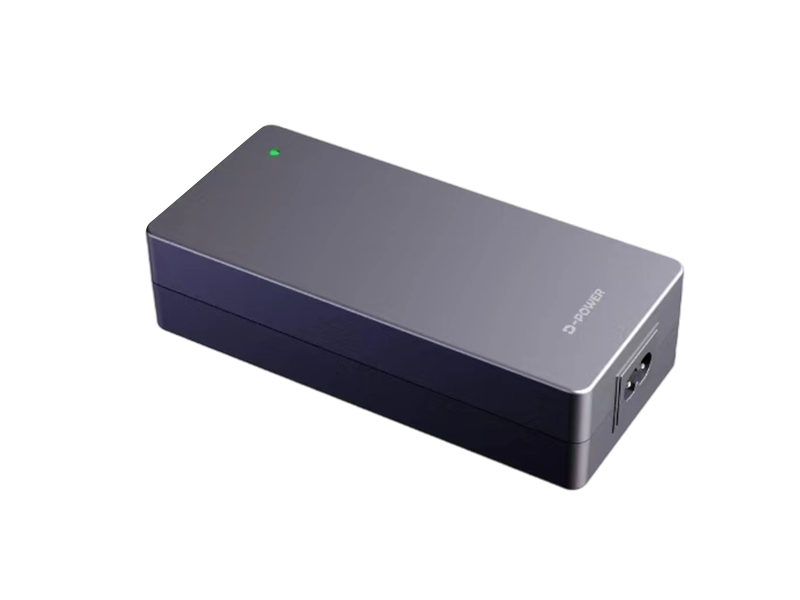
A high-power lithium battery charger serves as the critical bridge between a power source and a lithium battery pack. It manages the complex process of converting alternating current into the precise direct current required for safe and fast charging. Lithium batteries are highly sensitive to voltage fluctuations. If a charging device supplies too much voltage, the battery faces thermal runaway risks. If it supplies too little, the battery suffers from sulfation or capacity loss over time. Therefore, the charging unit must maintain strict control over the entire energy transfer process to protect the battery chemistry and extend the operational lifespan of the equipment.
Modern charging solutions incorporate several advanced features to ensure performance and safety. Users must evaluate these features carefully before making a purchasing decision.
The most reliable high power lithium battery charger for electric vehicles typically uses a multi-stage charging profile. This process usually includes a constant current stage followed by a constant voltage stage, ending with a precise cut-off point. During the constant current stage, the device delivers a steady stream of energy to quickly raise the battery capacity. Once the battery reaches a specific voltage threshold, the device switches to a constant voltage mode to safely top off the remaining capacity without causing heat buildup.
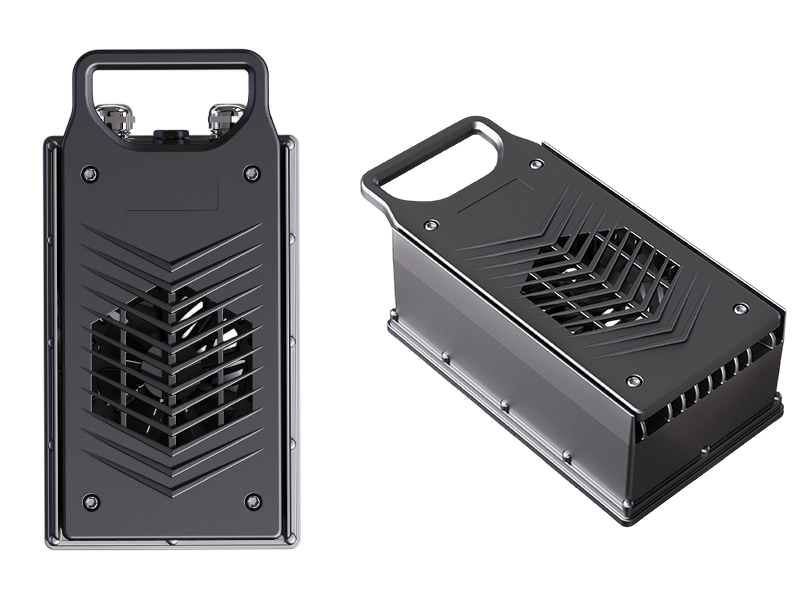
Safety certifications act as a baseline indicator of product reliability. A professional manufacturer usually obtains certifications like FCC, UL, CE, and GS for their products. These certifications prove that the device meets strict electrical safety and electromagnetic compatibility standards. A certified high-power lithium battery charger significantly reduces the risk of electrical fires, short circuits, and interference with other electronic equipment. Buyers should always request certification documentation to verify compliance.
Various industries require robust charging solutions to maintain their operational efficiency. The specific power demands vary significantly depending on the application.
Automated guided vehicles operate continuously in logistics centers and manufacturing plants. These vehicles cannot afford long downtime for battery replacement. An AGV high-power lithium battery charger allows these vehicles to recharge rapidly during short rest periods or shift changes. The charging process must be highly efficient and generate minimal heat, as the vehicles often operate in enclosed environments. Fast charging capabilities directly translate to higher productivity and lower operational costs for warehouse managers.
Drones used for industrial inspections or agricultural spraying carry large battery packs. Ground crews need to minimize the turnaround time between flights. A fast charging high power lithium battery charger enables operators to prepare multiple battery packs in a fraction of the time required by standard chargers. This rapid turnaround capability is essential for meeting tight project schedules and the daily flight hours of the drone fleet.
Selecting the appropriate charging equipment requires a clear understanding of the battery specifications and the operating environment. Buyers should evaluate their specific needs against the technical parameters of the available options.
The first step in selection is matching the voltage and current ratings to the battery pack. A charger with insufficient power output will charge too slowly, while an overly powerful unit may damage the battery cells. Users must check the nominal voltage of their battery pack and select a charger that matches this specification exactly. Additionally, the current output of the charger should align with the charging current recommended by the battery manufacturer.
Different battery types require different charging curves. Lithium iron phosphate batteries and standard lithium-ion batteries have distinct voltage thresholds. Buyers often compare standard lithium-ion chargers with lithium iron phosphate models to understand the differences. Standard lithium-ion models typically reach a full charge voltage of 4.2 volts per cell. Lithium iron phosphate models usually cap at 3.65 volts per cell. Using the wrong standard leads to severe battery degradation or immediate failure.
| Parameter | Standard Lithium-Ion Charging | Lithium Iron Phosphate Charging |
| Full Charge Voltage Per Cell | 4.2V | 3.65V |
| Typical Application | Consumer electronics, electric bicycles | Electric vehicles, energy storage systems |
| Thermal Stability | Moderate | High |
| Cycle Life Expectancy | 500 to 1000 cycles | 2000 to 5000 cycles |
Off-the-shelf products do not always meet the unique requirements of specialized equipment. Many industrial users need a customized high power lithium battery charger designed specifically for their proprietary battery packs. Customization can include specific connector types, unique communication protocols for battery management systems, or specialized enclosure ratings for harsh environments. Working directly with a manufacturer allows engineers to tailor the charging profile to the exact needs of the application.
The lifespan of a charging unit depends heavily on its component quality and thermal management design. Industrial environments often expose equipment to dust, moisture, and temperature extremes.
A well-designed unit dissipates heat efficiently to prevent internal components from degrading. Manufacturers located in regions with advanced technology supply chains can easily source high-grade components. This geographic advantage allows them to integrate the latest technological improvements into their products quickly. Furthermore, adherence to quality management systems like ISO 9001 ensures that every unit undergoes rigorous testing before leaving the factory.
A standard charger lacks the power output required to charge a high-capacity battery efficiently. The charging time will extend dramatically, and the charger may overheat due to continuous load operation. In some cases, the battery management system might reject the low current input entirely, resulting in a failed charge.
You must verify that the charger has an automatic shut-off feature that disconnects the power when the battery reaches full capacity. Additionally, the presence of certifications like UL or CE indicates that the device has passed rigorous safety tests for thermal management and fault protection. Checking for these features and certifications guarantees safe overnight operation.
Different lithium battery chemistries have different internal resistances and voltage tolerances. A charging profile that works perfectly for one chemistry might overcharge another. Using a mismatched charger alters the chemical stability of the battery, leading to reduced capacity, increased heat generation, and potential safety hazards like fire or explosion.

 No.18-9 Zhang Hong Road ,Huishan District,Yanqiao Street,Wuxi City,Jiangsu Province,China
 +86-510-83138966
 [email protected]
TALK TO US
Copyright © Wuxi Dpower Electronic Co., Ltd. All Rights
Reserved.
Custom Smart Lithium Battery Charger Manufacturer