English
 Español



DPOWER ELECTRONIC
DPOWER ELECTRONIC
DPOWER ELECTRONIC
DPOWER ELECTRONIC
DPOWER ELECTRONIC
DPOWER ELECTRONIC
12V to 24V Conversion Guide: How to Choose the Right 24V Lithium Battery Charger
 Home / News / Industry News / 12V to 24V Conversion Guide: How to Choose the Right 24V Lithium Battery Charger
Content
Sep 10, 2026
Your AGV or e-scooter prototype is running on 12V, and the motor controller is already at its current limit. At full load, a 100Ah pack draws about 117A, cable terminal temperatures reach about 45 degrees C, and voltage sag under load drops to 10.2V at the controller. A 12V to 24V conversion for the same 1.4kW cuts the current to about 58A, halves the copper loss, and gives the controller room to run a larger motor. But the conversion does not stop at the battery. It changes the entire charging path: your 12V charger cannot charge a 24V pack, and a mismatched charger is the most common cause of premature battery failure in converted systems.
A 12V to 24V conversion is not a battery swap. It changes current flow, wiring, and the charger requirements for the whole system. If you keep the same power, doubling the voltage halves the current. If you keep the same current, doubling the voltage doubles the power.
The relationship is P = V x I. On a 12V system delivering 1.4kW, the controller draws 117A. On a 24V system delivering the same 1.4kW, it draws 58A. That 59A reduction changes the cable size you can use, the terminal temperature you will see, and the charger output you need.
The most common failure after a 12V to 24V conversion is not the motor or the wiring. It is the charger. Reusing a 12V charger on a 24V pack will either do nothing because the output voltage is below the pack voltage, or overcharge the pack if the charger was set to a higher output.
| Method | Output system | Charger used | Efficiency | Best for |
|---|---|---|---|---|
| DC-DC step-up converter | 24V to the load | Existing 12V charger | 85-93% | Low current 24V accessories |
| Two 12V batteries in series | 24V pack | 24V lithium charger | 99%+ | Traction, AGV, e-bike |
| One dedicated 24V pack | 24V pack | 24V lithium charger | 99%+ | New builds and OEM integration |
If you join two 12V lithium packs in series, you must charge them with a 24V charger that matches the pack chemistry. A 24V LiFePO4 pack has a nominal voltage of 25.2V and a full charge voltage of 29.2V. A 24V NMC pack reaches 29.4V at full charge. The charger has to hold a constant current phase, then a constant voltage phase, and terminate when current falls to the low threshold.
For a 50Ah 24V pack, a standard charge rate is 5-10A. For a 100Ah pack, 10-20A is normal. A lower output charges slower but safely; a higher output than the BMS allows will overheat the cells and trip the BMS. Some designers add an active balancer between the two 12V packs, because a 24V charger cannot equalize two separate packs in series. The balancing must happen inside each pack or through an external balancer.
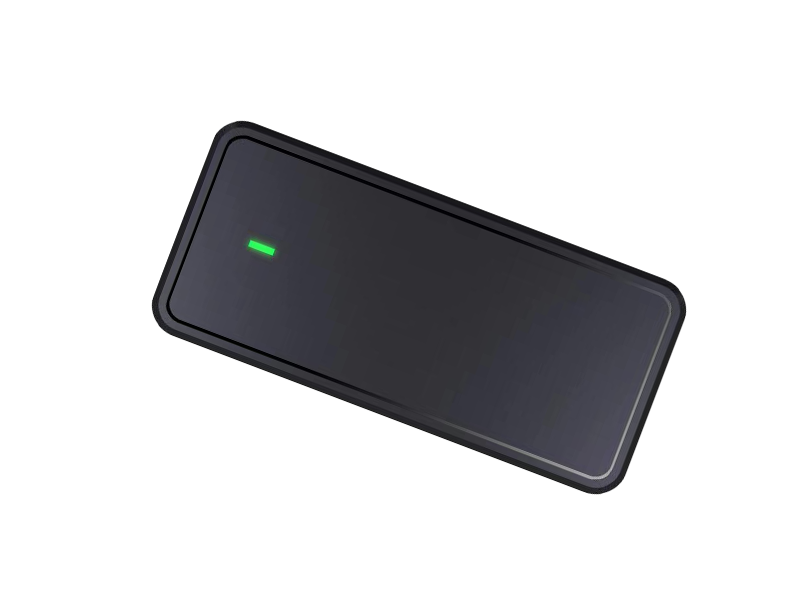 24V Lithium Battery Charger for 24V Battery PacksThis 24V charger with a nominal output of 29.4V is suitable for 24V lithium battery packs used in e-bikes and scooters. It supports customization with CAN BUS protocols and is built for reliable charging in outdoor conditions.View Product →
The safest 24V charger for a converted system is one with +/-0.1V or better voltage accuracy, a lithium-specific CC/CV profile, and recognized safety certifications. Voltage accuracy is the first spec to check. LiFePO4 absorption voltage is 29.2V. If your charger is off by 0.3V, it can push cells into the overvoltage region and shorten pack life.
| Specification | Why it matters | Minimum acceptable | Recommended |
|---|---|---|---|
| Voltage setpoint accuracy | Overcharging damages lithium cells | +/-0.3V | +/-0.1V |
| Charge profile | Controls current and termination | CC/CV | CC/CV with pre-charge |
| Safety certifications | EMC and product safety testing | CE or UL | CE + UL + FCC + KC + PSE |
| Cooling | Continuous charge generates heat | Fan or aluminum body | Fan cooled with temperature derating |
Wuxi D-Power Electronic Co., Ltd. builds 24V lithium battery chargers for e-mobility, AGV, drone, and power tool customers. Their 24V chargers use a CC/CV profile, hold output voltage to tight tolerance, and are compliant with CE, UL, FCC, KC, PSE, RCM, BSMI, and ROHS. For OEM and ODM programs, the company can match the charger to your exact battery chemistry and connector. This matters for a converted system because the voltage curve and termination point must be set for the cells you actually use. The voltage settings and smart features of a 24V lithium battery charger explain how these setpoints translate into safe charging.
Charging errors cause more conversion failures than motor or wiring mistakes. Here are the five most common ones.
The 14.6V output from a 12V charger is below the 24V pack voltage, so no current flows and the pack never charges. If someone swaps a 12V battery back in later, the same charger will overcharge it.
Two 12V packs connected in series must be at the same state of charge before the first connection. The weaker pack discharges faster, and the BMS may trip during charge if one pack reaches full voltage before the other.
A lead-acid charger with a 29.2V bulk voltage will damage LiFePO4 cells. The charger must use a lithium-specific profile with proper termination.
Going to 24V halves current only if power stays the same. If you double the motor power, current stays at the old level and the original wire continues to run hot.
A boost converter adds 5-10% losses. In a sealed enclosure, those losses become heat, and the converter derates or shuts down under sustained load.
If you are building a 24V pack from two 12V packs, buy matched batteries from the same production batch, connect them in series only after equalizing their state of charge, and replace the charger with a 24V lithium-specific model.
No. A 12V charger typically outputs about 14.6V, which is below a 24V pack's nominal voltage. Current will not flow into the battery. To charge a 24V pack, you need a charger rated for 24V output with the correct lithium CC/CV profile.
A DC-DC boost converter lets you keep the 12V battery and charger, but it adds 5-10% conversion losses and is limited by its own current rating. A series battery setup is more efficient and quieter, but it requires a 24V charger and matched battery packs. For traction systems and AGVs, the series setup is usually more reliable.
For a 24V pack, standard charge current is 10-20% of amp-hour capacity. A 50Ah pack charges at 5-10A; a 100Ah pack charges at 10-20A. Higher currents shorten charging time but require a charger and BMS rated for the higher rate.
Look for recognized safety certifications such as CE, UL, FCC, KC, PSE, RCM, and BSMI. Confirm the output voltage accuracy, and make sure the charger has overvoltage, overcurrent, temperature, and reverse polarity protection. A charger from a manufacturer with ISO 9001-based quality management is the safer procurement choice.

 No.18-9 Zhang Hong Road ,Huishan District,Yanqiao Street,Wuxi City,Jiangsu Province,China
 +86-510-83138966
 [email protected]
TALK TO US
Copyright © Wuxi Dpower Electronic Co., Ltd. All Rights
Reserved.
Custom Smart Lithium Battery Charger Manufacturer