English
  Español


DPOWER ELECTRONIC
DPOWER ELECTRONIC
DPOWER ELECTRONIC
DPOWER ELECTRONIC
DPOWER ELECTRONIC
DPOWER ELECTRONIC
Complete 36 Volt Battery Charging Guide: Voltage, Amps, and Safety Rules
 Home / News / Industry News / Complete 36 Volt Battery Charging Guide: Voltage, Amps, and Safety Rules
Content
Sep 04, 2026
In an AGV production line, a 36 volt battery pack was mistakenly topped up with a 24V charger, and the pack shut down at 38 degrees Celsius during the second charge. The maintenance log showed the charger had been in service for two years, but the real fault was a voltage mismatch that had been silently damaging the cells. This is a pattern Wuxi D-Power Electronic Co., Ltd. sees across electric bicycles, scooters, and automated guided vehicles.
A 36 volt battery is a lithium-ion pack with a nominal voltage of 36V, but its charge voltage can vary from 42V to 43.8V depending on the cell chemistry. Matching the charger to that exact voltage is the difference between a battery that lasts 800 cycles and one that fails in six months. This guide explains how 36V charging really works, what specs matter when buying a charger, and how to diagnose a faulty charging setup.
Start with the cell chemistry. A 36 volt battery is never a single voltage value; it is a nominal figure derived from the series count of individual cells. For lithium-ion cells rated at 3.6V, a 10S pack gives 36V nominal and requires a 42V charge voltage. For lithium iron phosphate cells rated at 3.2V, a 12S pack gives 38.4V nominal but is still marketed as a 36V battery, and it requires a 43.8V charge voltage. These two chemistries use different CC/CV cut-off thresholds, so a charger that is perfect for one can over-charge the other.
| Chemistry | Nominal voltage | Max charge voltage | Discharge cutoff |
| Lithium-ion 10S | 36V | 42V | 30V |
| LiFePO4 12S | 38.4V | 43.8V | 30V |
Charging a 36 volt battery with the wrong voltage is the fastest way to permanently reduce its usable capacity. Even a 0.5V overshoot above the recommended charge voltage can push lithium-ion cells into a region of accelerated electrolyte decomposition. The internal temperature climbs, the BMS trips, and the pack may become unusable. Undercharging is equally harmful. If a 36V pack is charged to 39V instead of 42V, the cell voltage never reaches full equilibrium, the pack constantly sits in a deep-discharge state, and the negative electrode begins to lose lithium inventory.
A 36 volt battery serves different devices with very different capacity and current demands, so a single charger setting cannot cover all cases. The same nominal voltage requires a 2A charge for a cordless tool and a 10A charge for an AGV tugger.
| Application | Typical capacity | Recommended charge current | Estimated charge time |
| Electric scooter | 10-15Ah | 2-3A | 3-5h |
| Cordless tool | 2.5-5Ah | 1-2A | 1-2h |
| AGV | 20-40Ah | 5-10A | 3-5h |
Matching a charger to a 36 volt battery requires five steps that are easy to skip but costly to miss. Follow this sequence before placing the order.
A dedicated 36V charger that implements these parameters is available in Wuxi D-Power's 36V charger category. The product link below points to the full specification sheet.
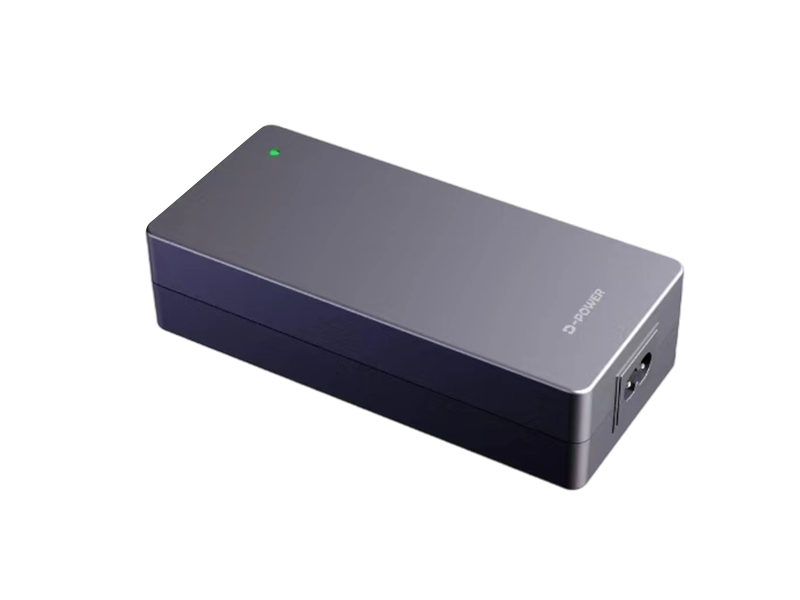 36V Lithium Battery Charger with Multiple Protections and Communication OptionsThis 36V charger is designed for common applications like e-bikes and scooters. It features natural heat dissipation, anti-reverse connection, and temperature protection to ensure reliable charging. With a 27-month warranty and long service life, it addresses typical charger failures.View Product →
Most 36 volt battery charger failures are caused by one of three issues: no output, premature cutoff, or overheating. The table below shows the fastest diagnostic path.
| Symptom | Possible cause | Recommended action |
| No output | Blown input fuse or open rectifier | Check fuse and input voltage; replace fuse if needed |
| Charging stops early | BMS over-voltage protection | Measure pack voltage with a multimeter; verify charger voltage is correct |
| Battery gets hot | Charge current too high | Reduce current to 0.3C of pack capacity |
For more detail on why 36V chargers fail, read the technical article on why your 36V charger may stop working.
For a 10S lithium-ion pack, full charge is 42.0V. For a 12S LiFePO4 pack marketed as 36V, full charge is 43.8V. Always check the battery label before selecting a charger.
No. A 48V charger typically outputs 54.6V, which is 12V above the 36V pack's limit. This will trigger BMS protection or cause thermal runaway. Use a charger rated for the exact pack voltage.
For a standard pack, 0.3C to 0.5C of capacity is safe. A 20Ah pack accepts 6A to 10A; a 10Ah pack accepts 3A to 5A. Fast charging above 1C may require a charger with active cooling and a BMS that supports high-rate charging.
At the recommended current, most 36V packs take 2 to 5 hours. A 10Ah scooter pack at 3A takes about 4 hours; a 30Ah AGV pack at 10A takes about 3.5 hours.

 No.18-9 Zhang Hong Road ,Huishan District,Yanqiao Street,Wuxi City,Jiangsu Province,China
 +86-510-83138966
 [email protected]
TALK TO US
Copyright © Wuxi Dpower Electronic Co., Ltd. All Rights
Reserved.
Custom Smart Lithium Battery Charger Manufacturer