English
 Español



DPOWER ELECTRONIC
DPOWER ELECTRONIC
DPOWER ELECTRONIC
DPOWER ELECTRONIC
DPOWER ELECTRONIC
DPOWER ELECTRONIC
48V Batteries Explained: Voltage, Charging, Safety, and Li-ion Charger Guide
 Home / News / Industry News / 48V Batteries Explained: Voltage, Charging, Safety, and Li-ion Charger Guide
Content
Sep 17, 2026
For electric bicycles, e-scooters, delivery drones, automated guided vehicles, and many other battery-powered machines, the 48 V battery has become a practical standard. It offers a useful balance of power, weight, and cost for both compact personal transport and larger industrial equipment. Understanding how 48 V batteries work, how they should be charged, and what to look for in a matching 48 V lithium battery charger is essential for long service life and dependable performance.
A 48 V battery is a series-connected pack with a nominal voltage of about 48 V. In modern lithium-ion packs, this usually means 13 cells connected in series, a configuration written as 13S. Each cell has a nominal voltage of around 3.7 V, so the complete pack measures roughly 48.1 V at rest. When fully charged, the same pack reaches about 54.6 V. This is why a 48 V lithium battery charger must be designed around that specific voltage profile.
A related layout is the 14S pack, which is commonly labelled as 52 V because its nominal voltage is 51.8 V and its full charge voltage is 58.8 V. Many modern chargers support both 48 V and 52 V packs, giving equipment manufacturers one charging solution for two of the most common battery configurations.
| Configuration | Cell arrangement | Nominal voltage | Full charge voltage | Discharge cut-off |
|---|---|---|---|---|
| 48V Li-ion | 13S | 48.1 V | 54.6 V | 39.0 V |
| 52V Li-ion | 14S | 51.8 V | 58.8 V | 42.0 V |
Lead-acid systems also use the 48 V level, mainly in golf carts and some industrial vehicles. However, lithium chemistry is now the preferred choice for new equipment because it saves weight, delivers more usable energy, and lasts significantly longer. For replacement or new builds, the lithium configuration above defines both the battery specification and the charger requirement.
The 48 V platform appears across personal mobility, logistics, industrial automation, and renewable energy. Typical applications include:
Because these devices operate in very different environments, their charging requirements also differ. A drone charger may need to be compact and fast, while an AGV charging station must support daily multi-cycle operation. This is why equipment makers prefer a lithium battery charger supplier with flexible design capability and a clear understanding of lithium charging curves.
Lithium batteries are charged using a CC-CV profile: constant current until the pack reaches its maximum voltage, then constant voltage while the current gradually tapers. The charger controls this process and must know exactly when to stop. Charging a 48 V lithium battery with a lead-acid charger or a generic power supply can overcharge cells, trigger protection circuits, or shorten battery life significantly.
For most 48 V lithium packs, the charger output must reach 54.6 V and automatically follow the CC-CV sequence. A well-designed 48V/52V lithium battery charger provides the correct cut-off logic, efficient thermal management, and connector options for common battery brands. You can learn more about what makes a 48V/52V lithium battery charger suitable for different battery packs.
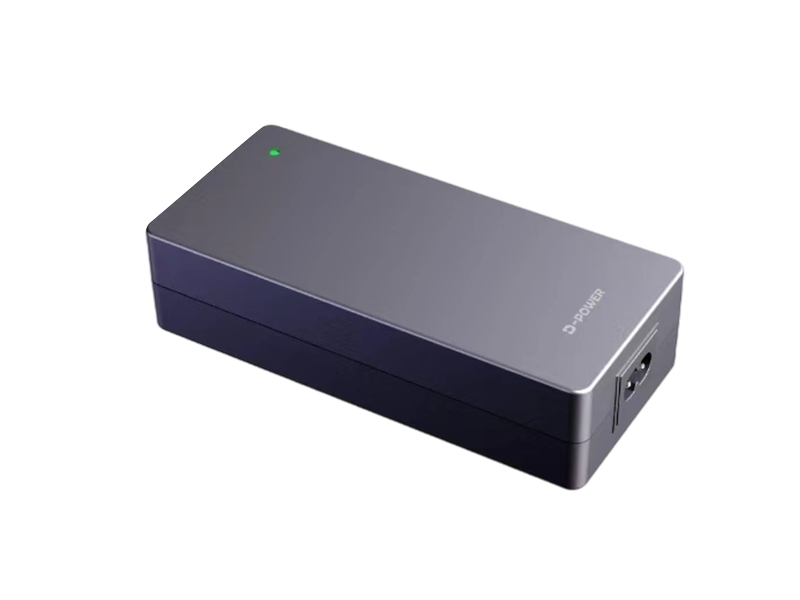
 48V and 52V Lithium Battery Charger with Smart ProtectionThis charger supports 48V and 52V lithium packs, automatically identifies Li-ion and LiFePO4, and includes nine safety protections. It suits e-bikes, e-scooters, and portable storage with household outlet compatibility.View Product →
A 48 V lithium battery is only as safe and efficient as the charger you pair with it.
Not all chargers with a similar label behave the same. When evaluating a charger for a product line, a repair service, or an internal fleet, check these points:
Certification is especially important for equipment brands. A charger that lacks the right approvals can delay product launches or block market entry entirely. A dedicated lithium battery charger manufacturer with international compliance experience can solve these issues before production.
| Certification | Target market |
|---|---|
| UL / FCC | North America |
| CE / GS | Europe |
| PSE | Japan |
| KC | South Korea |
| RCM | Australia |
| BSMI | Taiwan |
| RoHS | Restricted substances |
Charging time depends on battery capacity, charger output current, and the battery state. As a rule of thumb, charge time is capacity divided by current, with some additional time for the constant-voltage finishing stage.
| Battery capacity | Charge current | Approx. time |
|---|---|---|
| 10 Ah | 2 A | 5 h |
| 10 Ah | 5 A | 2 h |
| 15 Ah | 5 A | 3 h |
| 20 Ah | 5 A | 4 h |
| 20 Ah | 10 A | 2.5 h |
| 30 Ah | 10 A | 3.5 h |
These numbers represent a typical full CC-CV charge. Higher current reduces downtime, but it also requires better heat management in both the charger and the battery. For large packs, industrial charging stations, or multi-bay charging racks, a high-power lithium battery charger is usually the more reliable choice.
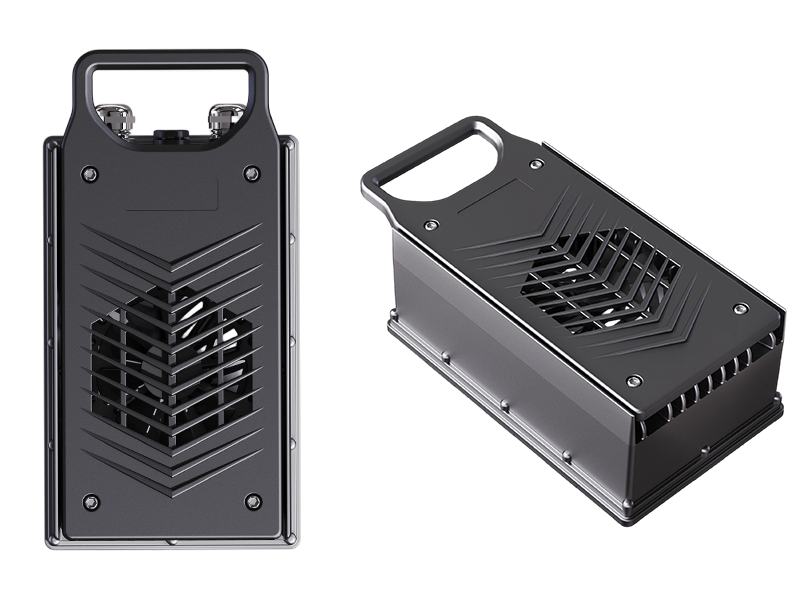 High Power Lithium Battery Charger for Industrial and Fleet UseDesigned for large packs and multi-bay racks, this charger offers power levels up to 6.6kW, enabling fast charging for electric vehicles, industrial tools, and energy storage while managing heat effectively.View Product →
These routine checks protect operators and equipment, and they significantly extend the cycle life of the battery. A small amount of discipline during charging avoids the majority of field failures reported for 48 V systems.
No. A normal charger, including a lead-acid charger, will not follow the CC-CV profile that lithium cells require. It may deliver too much current, overcharge the pack, or stop at the wrong voltage. The result can be reduced capacity, damaged cells, or a safety risk.
A 13S 48 V lithium pack needs a charger that outputs up to 54.6 V. A 14S 52 V pack needs up to 58.8 V. A combined 48V/52V charger is the most flexible option because it covers both common configurations.
With a typical 5 A charger, a 20 Ah pack takes roughly 4 hours. A 10 A fast charger reduces this to about 2.5 hours. The constant-voltage stage adds some time as the pack approaches full charge.
Only when the charger is designed for both 48 V and 52 V packs. The 52 V configuration requires a higher charge voltage, so a single-voltage 48 V charger will leave the pack undercharged and reduce its usable capacity.
A 48 V battery is a reliable power source when it is engineered, maintained, and charged correctly. The charger is the most critical link in that chain. As a lithium battery charger manufacturer and OEM/ODM partner, Wuxi D-Power Electronic Co., Ltd. designs safe, efficient, and globally certified charging solutions for e-bikes, e-scooters, drones, automated guided vehicles, and many other applications. Whether you need standard models or fully customized charging solutions, our team provides technical support from concept to volume production. Contact us today to discuss your 48 V charging project.

 No.18-9 Zhang Hong Road ,Huishan District,Yanqiao Street,Wuxi City,Jiangsu Province,China
 +86-510-83138966
 [email protected]
TALK TO US
Copyright © Wuxi Dpower Electronic Co., Ltd. All Rights
Reserved.
Custom Smart Lithium Battery Charger Manufacturer