English
 Español



DPOWER ELECTRONIC
DPOWER ELECTRONIC
DPOWER ELECTRONIC
DPOWER ELECTRONIC
DPOWER ELECTRONIC
DPOWER ELECTRONIC
CC/CV Charging Protocol Explained: Why It Is Critical for 24V Lithium Battery Safety
 Home / News / Industry News / CC/CV Charging Protocol Explained: Why It Is Critical for 24V Lithium Battery Safety
Sep 21, 2026
Charging a 24V lithium battery is more complex than simply connecting it to a power supply. The charger must deliver energy in a precise sequence of constant current and constant voltage, a process known as the CC/CV charging protocol. CC stands for constant current, and CV stands for constant voltage. This two-phase method is the industry-standard charging strategy for lithium-ion and lithium iron phosphate batteries.
When the protocol is implemented correctly, a charger maximizes charging efficiency, protects the battery from overcharging and overheating, and preserves cycle life. When it is ignored or poorly executed, the result can be cell damage, premature failure, or even thermal runaway. This article explains how the CC/CV charging protocol works and why it is especially critical for 24V lithium battery safety.
The CC/CV charging protocol is a two-stage charging strategy designed to match the electrochemical characteristics of lithium batteries. In the constant current (CC) stage, the charger pushes a fixed current into the battery while the voltage rises naturally. Once the voltage reaches a predefined limit, the charger switches to the constant voltage (CV) stage, holding the voltage steady while the current gradually decreases.
This transition is not arbitrary. The voltage limit is set according to the battery chemistry and the number of cells in series, while the current limit is selected based on the battery capacity and the desired charge time. For a typical 24V lithium battery pack, the full charge voltage is usually in the range of 29.2V to 29.4V, depending on whether the pack uses lithium iron phosphate or nickel manganese cobalt cells.
A complete CC/CV charging cycle for a 24V lithium battery usually contains four stages: pre-charge, constant current, constant voltage, and termination. Each stage has a distinct purpose in protecting the cells.
| Stage | Charger Action | Battery Response | Safety Purpose |
|---|---|---|---|
| Pre-charge | Delivers a very low current | Voltage recovers slowly from deep discharge | Protects cells that are near zero voltage |
| Constant current | Holds current at a fixed level | Voltage climbs to the charge voltage limit | Prevents excessive current and heat buildup |
| Constant voltage | Holds voltage at the limit | Current tapers off as cells saturate | Prevents overvoltage and lithium plating |
| Termination | Cuts off current or switches to standby | Charging stops; BMS confirms the state | Prevents overcharging and thermal runaway |
In the constant current stage, the charger acts like a current source, ensuring that the battery is never asked to accept more current than it can safely handle. In the constant voltage stage, the charger acts like a voltage source, ensuring that no cell is pushed beyond its maximum voltage. The transition point, known as the CC to CV transition, is where the battery reaches its full voltage and the charger begins to reduce current automatically.
Lithium batteries store a large amount of energy in a compact space. When charged incorrectly, they can release that energy quickly and dangerously. The CC/CV protocol is the primary defense against these failures, and it is critical for 24V lithium batteries for the following reasons:
Most 24V lithium battery incidents are traced back to overcharging, high-temperature charging, or the use of a charger with an incorrect voltage curve. A correctly executed CC/CV profile addresses all three of these root causes.
Not all chargers labeled as lithium chargers implement the CC/CV protocol correctly. Some cheap or generic power supplies deliver a constant voltage only, while others have incorrect voltage thresholds or no termination logic. Using such a charger with a 24V lithium battery can trigger a chain of dangerous events.
Choosing a charger for a 24V lithium battery is a safety decision, not just a purchasing decision. The charger must match the battery chemistry, capacity, and connector configuration, and it must follow a genuine CC/CV profile. Start by checking the charging voltage and current settings recommended by the battery manufacturer. For guidance on how these parameters are configured, review our explanation of 24V lithium battery charger voltage settings and smart features.
A safe 24V lithium battery charger should also include protections such as short-circuit protection, reverse polarity protection, over-temperature cutoff, and an auto-detection mechanism that stops charging when the current drops below the termination threshold.
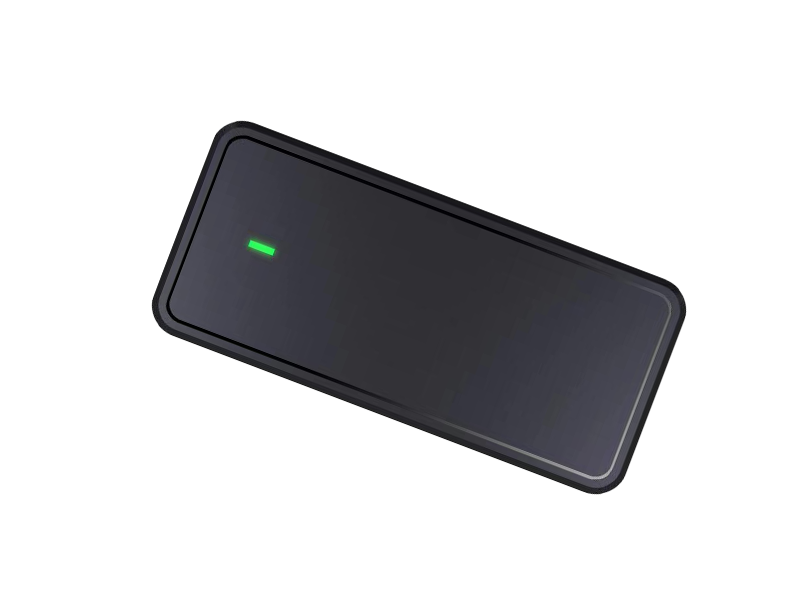 24V Lithium Battery Charger with Customizable CommunicationThis 24V charger suits e-bikes, scooters, and power tools, with adaptable CC/CV curves and optional CAN BUS. Its protective features and international certifications make it a reliable choice for OEM and industrial battery packs.View Product →
For industrial and OEM applications, look for a manufacturer that can adapt the CC/CV curve, current rating, and connector types to your specific 24V battery pack. Certifications such as FCC, GS, UL, CE, KC, PSE, RCM, BSMI, and ROHS are good indicators that the charger has been tested against international safety and environmental requirements. A certified charger with a well-documented CC/CV algorithm gives you a predictable and defensible charging process, whether you are building electric bicycles, drones, AGVs, or battery powered tools.
CC, or constant current, charging keeps the charging current fixed while the battery voltage rises. CV, or constant voltage, charging keeps the voltage fixed while the current decreases naturally. Lithium batteries need both stages to achieve a safe and complete charge.
The correct charge voltage depends on the cell chemistry. A common 24V lithium iron phosphate pack with eight cells charges to about 29.2V, while a seven-cell nickel manganese cobalt pack charges to about 29.4V. Always confirm the exact value from the battery specification sheet.
No. Lead-acid chargers use different voltage thresholds and often lack proper termination logic. They can overcharge lithium cells, causing swelling and thermal runaway. Only use a charger designed for lithium batteries with a genuine CC/CV profile.
Yes. Fast charging simply increases the current during the CC stage and may tighten the voltage tolerance during the CV stage. However, fast charging requires stronger thermal management and BMS communication to remain safe.
CC/CV charging is not a luxury feature on a 24V lithium battery charger; it is the core safety mechanism that prevents overcharging, controls heat, and ensures a complete and balanced charge. Every stage from pre-charge to termination plays a defined role in protecting the cells and extending their service life. When you select a charger, evaluate the precision of its CC/CV algorithm, the quality of its protection circuits, and the credibility of its safety certifications.
For equipment manufacturers and distributors who need reliable charging solutions, working with an experienced lithium battery charger manufacturer ensures that the CC/CV curve is correctly matched to the battery chemistry and application. Whether you need a standard 24V lithium battery charger or a fully customized solution, a safe charging process is the foundation of a safe battery system.

 No.18-9 Zhang Hong Road ,Huishan District,Yanqiao Street,Wuxi City,Jiangsu Province,China
 +86-510-83138966
 [email protected]
TALK TO US
Copyright © Wuxi Dpower Electronic Co., Ltd. All Rights
Reserved.
Custom Smart Lithium Battery Charger Manufacturer