English
 Español



DPOWER ELECTRONIC
DPOWER ELECTRONIC
DPOWER ELECTRONIC
DPOWER ELECTRONIC
DPOWER ELECTRONIC
DPOWER ELECTRONIC
Fanless Convection Cooling vs. Active Fan Cooling for 36V E-Bike Chargers
 Home / News / Industry News / Fanless Convection Cooling vs. Active Fan Cooling for 36V E-Bike Chargers
Content
Oct 01, 2026
For any 36V e-bike charger, heat management determines far more than peak efficiency. It shapes reliability, safety, charging speed, and daily user experience. Charger manufacturers generally choose between two thermal architectures: active fan cooling, which uses one or more fans to force air through the enclosure, and fanless convection cooling, which relies on naturally rising warm air across a precisely designed heatsink. Both methods are common in the industry, but they perform very differently under sustained load, in dusty rooms, and across years of regular use. This article compares both strategies for 36V e-bike chargers, covering the engineering trade-offs, maintenance needs, and the scenarios that favor each design.
Charging a 36V lithium-ion battery follows a constant-current/constant-voltage (CC-CV) profile. During the constant-current stage, the charger delivers peak continuous power, and its switching MOSFETs, transformer, rectifier diodes, and output capacitors all release significant heat. If that heat cannot escape quickly, internal temperatures climb and the results are familiar:
For e-bike manufacturers and fleet operators, these effects become warranty costs and vehicle downtime. Thermal design is a core engineering requirement, not a specification footnote.
An actively cooled 36V e-bike charger uses one or more brushless DC fans to draw cool air through intake vents and push hot air out through exhaust openings. The airflow crosses the main heatsink and high-heat components, keeping temperatures well below limits at full output. Smart models add thermistor-based fan control: the fan stays off during light loads, starts at a set temperature, and ramps only when needed.
A fanless convection-cooled charger contains no moving parts. Power components transfer heat through a thermal interface into an aluminum heatsink that extends into large external fins. Air around the fins heats up, becomes less dense, and rises, drawing cooler air upward from below. That natural convection loop removes heat continuously and silently.
Engineers make this practical with high-efficiency topologies, low-loss components, thermal interface materials, and a PCB layout that spreads and couples every hot spot to the heatsink. The finished enclosure can be sealed against dust and moisture, offering a service life that no rotating design easily matches.
The table below summarizes the most relevant factors for 36V e-bike charger selection.
| Criteria | Fanless Convection | Active Fan Cooling |
|---|---|---|
| Acoustic noise | Silent | Audible fan noise |
| Moving parts | None | One or more fans |
| Sustained power density | Lower per unit volume | Higher per unit volume |
| Dust resistance | High when sealed | Moderate; regular cleaning |
| Maintenance interval | Long | Short; fan replacement |
| Best typical use | Quiet home and fleet charging | Fast charging in tight spaces |
Cooling design is a trade-off, not a ranking. The right solution matches continuous output, installation environment, acceptable noise, and the operator's maintenance capacity.
Selecting a thermal approach for a 36V e-bike charger comes down to four practical questions: current delivered continuously, installation location, acceptable noise, and the maintenance plan. These guidelines cover most scenarios:
A manufacturer that offers both thermal concepts can match the cooling strategy to the application. Wuxi D-Power Electronic Co., Ltd. builds 36V lithium battery chargers with certifications covering major global markets and supports OEM/ODM adaptation around the target duty cycle. For a dedicated 36V e-bike program, the 36V lithium charger is a natural starting point:
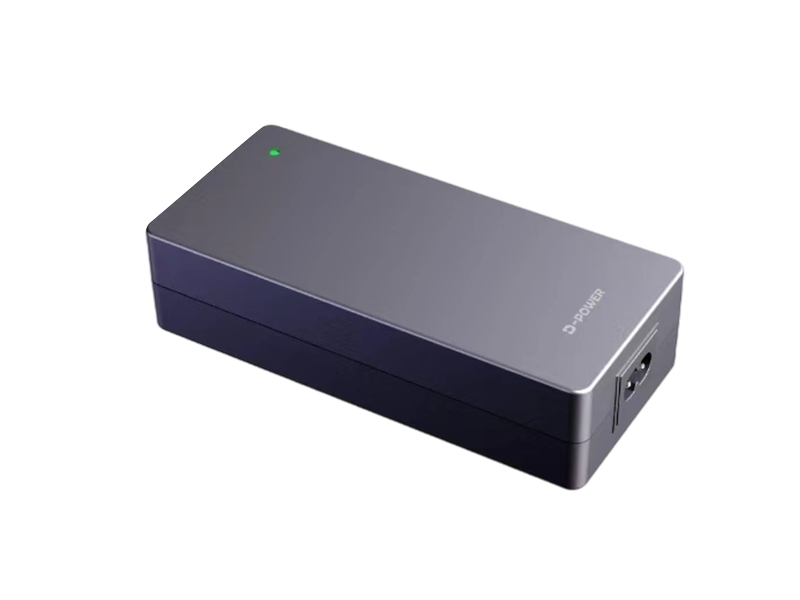 36V Lithium Battery Charger for E-Bikes and Light Electric VehiclesThis 36V charger suits e-bikes, scooters, and power tools, offering natural heat dissipation and protections like reverse-polarity and temperature safeguards. It supports multiple communication protocols and carries certifications for global markets, making it a practical starting point for dedicated programs.View Product →
For programs that expand to larger battery voltages or need faster energy replenishment, the high-power lithium battery charger extends the same thermal and safety engineering to bigger packs:
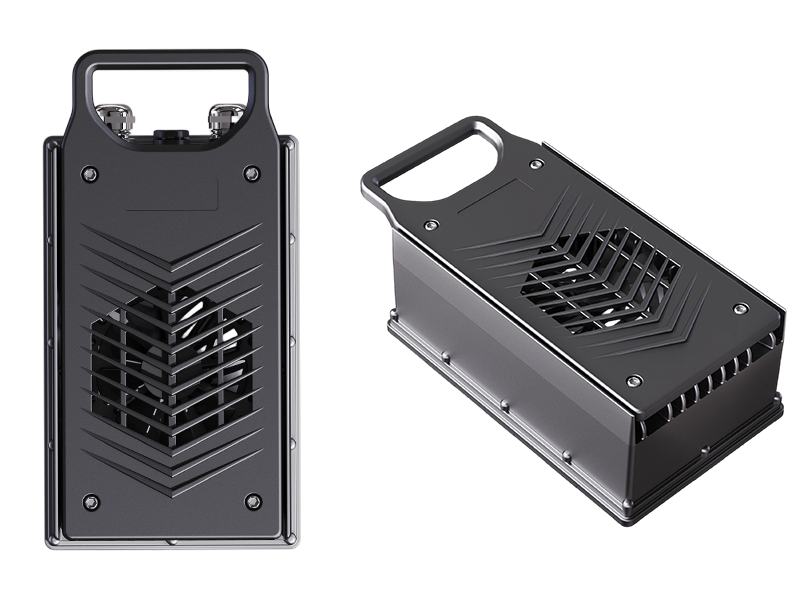 High-Power Lithium Battery Charger for Fast Charging ApplicationsDesigned for larger battery packs needing faster replenishment, this charger spans 500W to 6.6kW for electric transport, industrial energy storage, and agricultural use. It extends the same thermal and safety engineering to bigger batteries, addressing range anxiety and reducing vehicle idle time.View Product →
Whatever cooling method is used, a compliant 36V e-bike charger must include over-temperature protection, output short-circuit protection, reverse polarity protection, and an accurate CC-CV charging curve. For export products, certifications such as UL, CE, KC, PSE, RCM, or BSMI must match the destination market.
Check the vents and fan every one to three months. Compressed air removes dust from the blades and heatsink. If the fan becomes noisy or stalls, replace it immediately, because losing airflow can overheat the power stage even when protective circuits exist. Knowing the common causes of 36V charger failure helps technicians catch thermal problems early.
Keep the fins free of dust and allow at least five to ten centimeters of clearance around the enclosure. Do not place the charger on carpet or inside sealed compartments. In hot weather, move it to a cooler position or reduce the charge current. The same discipline applies to the battery side: following the recommended procedure to charge a lithium battery reduces heat stress on both the pack and the charger.
Safety reminder: always charge a 36V battery in a dry, well-ventilated area, on a non-combustible surface, and never cover the charger while it runs. Both cooling designs depend on free airflow to keep the electronics within their rated temperature window.
Yes, if both chargers supply the same output current and the battery accepts it. Charge speed is set by current rating, not cooling type. Active fan cooling simply sustains maximum output longer without derating in a compact case.
Neither type is inherently safer. A fan adds a component that can fail, but reputable chargers include thermal protection to shut down before temperatures become unsafe. Convection designs depend on open airflow paths; blocked vents are the most frequent cause of overheating in fanless models.
All factors being equal, fanless convection usually provides a longer service life because it has no fan bearings, motors, or rotating seals. A high-quality fan-cooled charger can still run for years, but the fan will likely need replacement at least once.
Choose it when maximum charge current must fit in a compact charger, when ambient temperatures are high, or when large 36V packs need the shortest possible charge time.
Fanless convection cooling and active fan cooling are both proven thermal strategies, but they serve different priorities. Fanless convection wins on silence, long-term reliability, and dust resistance, making it a strong match for home charging and fleet programs where maintenance must be minimized. Active fan cooling wins on power density and sustained output, making it a better candidate for fast charging and space-constrained installations.
The best 36V e-bike charger for any project is the one whose thermal design fits the real operating environment, charging profile, and maintenance plan. Working with a manufacturer that offers both architectures and supports OEM/ODM customization gives system integrators the flexibility to decide with confidence.

 No.18-9 Zhang Hong Road ,Huishan District,Yanqiao Street,Wuxi City,Jiangsu Province,China
 +86-510-83138966
 [email protected]
TALK TO US
Copyright © Wuxi Dpower Electronic Co., Ltd. All Rights
Reserved.
Custom Smart Lithium Battery Charger Manufacturer