

 English
 Español



DPOWER ELECTRONIC
DPOWER ELECTRONIC
DPOWER ELECTRONIC
DPOWER ELECTRONIC
DPOWER ELECTRONIC
DPOWER ELECTRONIC
Why High-Power Drone Chargers Require Multi-Channel Parallel Output Capability
 Home / News / Industry News / Why High-Power Drone Chargers Require Multi-Channel Parallel Output Capability
Content
Nov 09, 2026
Modern drones have evolved into mission-critical tools for agriculture, logistics, inspection, and public safety. As payloads grow and flight times stretch, onboard battery packs have become larger and more demanding. Charging those packs quickly without damaging cells is no longer a simple plug-and-play task. That is why high-power drone chargers require multi-channel parallel output capability: the design distributes load across independent circuits, boosts deliverable current, improves thermal behavior, and keeps ground crews moving even when one channel needs attention.
For fleet operators and drone manufacturers, charger architecture matters as much as rated wattage. This article explains the engineering and operational reasons behind parallel output and how it shapes safety, reliability, and fleet uptime.
Drone battery technology now favors high-capacity, high-voltage lithium packs. A heavy-lift agricultural or delivery platform may carry 12S to 14S packs with capacities of 20,000 mAh or more. Charging at a modest 5 A would take hours, far too long for commercial schedules where aircraft must return to service quickly.
To bring charge times down to practical levels, the charger must deliver substantial current, often 15 A, 25 A, or more, at pack voltages above 48 V. This pushes power ratings into the hundreds of watts and stresses every component in the charging path. A traditional single-output charger built for these levels faces constraints that a parallel multi-channel design handles with comparative ease.
The table below shows how charging requirements scale across common drone classes:
| Drone Class | Typical Pack Voltage | Typical Capacity | Charger Output Requirement |
|---|---|---|---|
| Small inspection quadcopter | 6S (22.2 V) | 4,000-6,000 mAh | 100-150 W |
| Mid-size delivery platform | 10S-12S (37-44.4 V) | 12,000-20,000 mAh | 300-600 W |
| Heavy-lift agricultural drone | 12S-14S (44.4-50.4 V) | 20,000-40,000 mAh | 800 W and above |
High-voltage packs need chargers matched to their chemistry and voltage range. For modern heavy-lift aircraft, a 48V-52V fast charger is often the practical choice, providing the voltage headroom needed to push current into large packs under a controlled CC/CV charging curve.
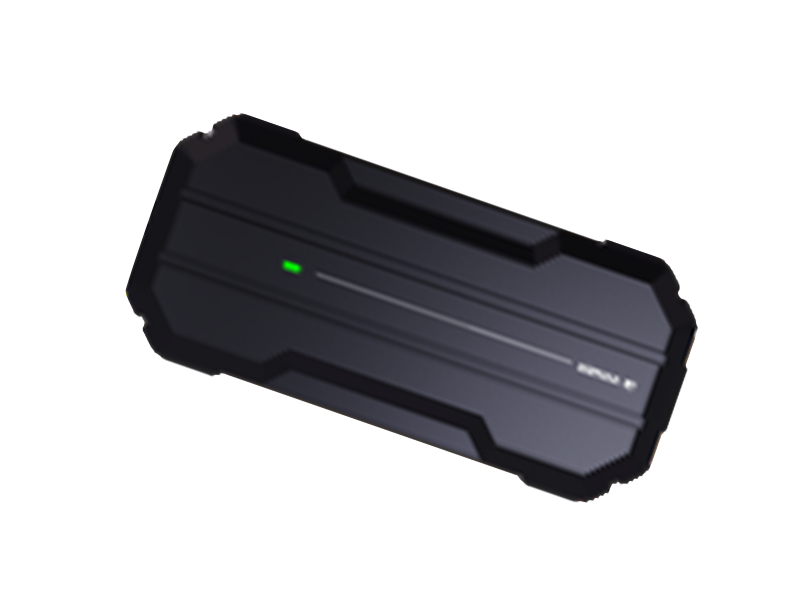 48V 52V Lithium Battery Fast Charger with Smart Safety FeaturesDesigned for 48V and 52V lithium battery devices like e-bikes and power tools, this fast charger offers nine-layer protection and automatic battery type detection, making it a practical choice for charging high-voltage packs safely and efficiently.View Product →
Multi-channel parallel output combines two ideas. First, a charger contains several independent power stages, or channels, instead of a single oversized converter. Second, those channels operate in parallel, so their outputs combine to serve one demanding pack or split to charge several packs at once.
This differs from a charger that simply offers multiple output ports wired to one supply. True parallel output requires current-sharing circuitry so each channel contributes nearly equal current, preventing hot spots, imbalance, and shutdown. It also means that if one channel develops a fault, the remaining channels continue charging at reduced power, a real advantage for remote or time-sensitive operations.
The requirement for parallel output comes from genuine electrical, thermal, and operational constraints:
Every transistor, inductor, and connector has a current ceiling. Pushing 40 A through one power stage demands expensive components and aggressive cooling. Spreading that current across several 10 A stages keeps each part inside its safe operating area, improving efficiency and service life.
Heat is the enemy of power electronics. One concentrated heat source needs bulky heatsinks and high-speed fans. Parallel stages distribute heat over a larger surface area, keeping temperatures lower even in hot field environments.
Commercial drone operations cannot afford a total charger failure. With parallel channels, a fault in one stage causes derating instead of shutdown, so crews can keep charging at lower current until the faulty module is repaired.
Fleet charging is rarely about one pack at maximum rate. It is often more productive to charge several packs at moderate rates using separate channels. Parallel-output chargers support both approaches without extra hardware.
The comparison below highlights the main differences:
| Feature | Single-Channel Output | Multi-Channel Parallel Output |
|---|---|---|
| Maximum current | Limited by one power stage | Sum of parallel stages |
| Thermal stress | Concentrated | Distributed |
| Redundancy | None | Continues on fault |
| Multi-pack flexibility | Limited | High |
| Scalability | Replace hardware | Add modules |
In the field, time is measured in battery cycles. An inspection crew flying multiple sorties a day needs packs ready the moment a drone lands. A delivery operator dispatching several aircraft from one hub must replenish a whole rack of batteries between shifts. Parallel-output charging makes these scenarios practical.
Chargers in the 36V class suit mid-size platforms and specialist aircraft using 10S packs, where multi-channel architecture delivers the same benefits at lower power levels. Matching the charger to the actual fleet voltage keeps ground support simple and cost-effective.
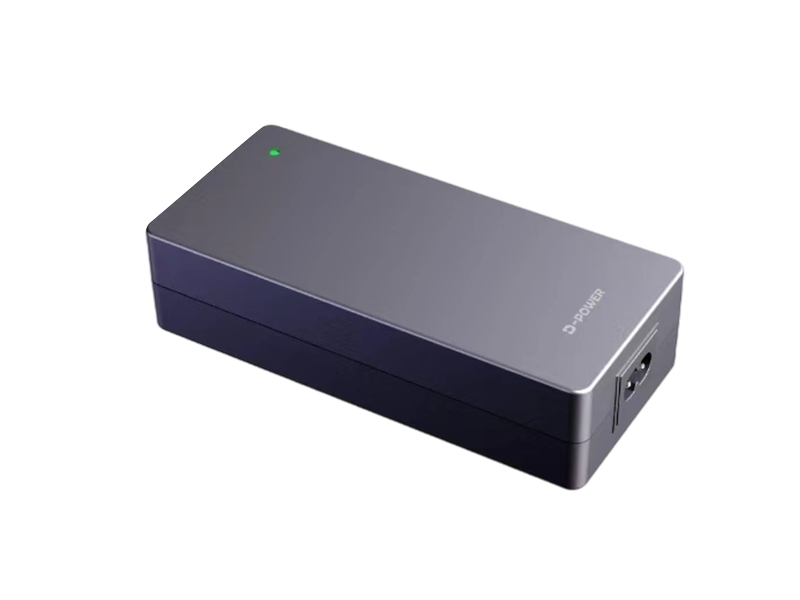 36V Li-ion Charger with Natural Cooling and Protocol SupportA reliable 36V charger for scooters, e-bikes, and power tools, featuring fanless natural heat dissipation, anti-reverse connection, and multiple communication protocols. Its long lifespan and universal voltage make it ideal for 10S pack ground support.View Product →
Choosing ground charging equipment goes beyond wattage. For high-power drone applications, evaluate these criteria:
For very high power levels, a purpose-built high-power lithium battery charger is a safer investment than stacking consumer chargers in parallel yourself. The right manufacturer designs the exact channel count, current-sharing, and protection scheme your fleet requires.
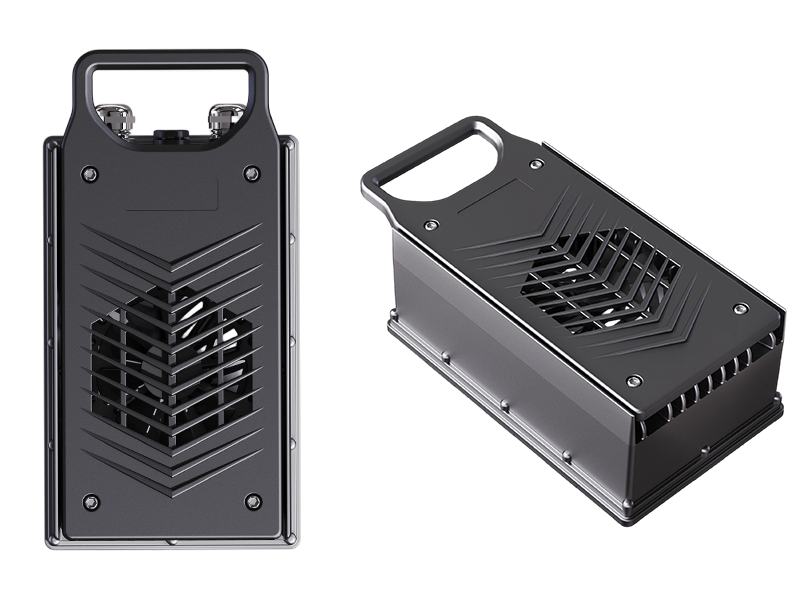 High Power Lithium Battery Charger for Electric Vehicles and StorageThis rugged charger handles 500W to 6.6KW across electric motorcycles, sightseeing vehicles, and industrial energy storage, enabling fast, centralized charging of multiple packs. Its robust design ensures safe parallel operation for demanding fleets.View Product →
Parallel output only improves safety when the charger is engineered correctly. Poorly implemented parallel stages can create circulating currents, uneven wear, and hot spots. Look for independent current sensing on each channel, coordinated thermal management, and automatic derating when internal temperature rises.
These design factors are central to the long-term reliability of high-power lithium battery chargers. A charger that controls heat well holds its current, protects the battery, and requires less maintenance over years of service.
It is a charger architecture with multiple independent power stages whose outputs can be combined to deliver higher current to one pack or divided to charge several packs at once. Current-sharing circuits keep the channels balanced.
For high-power, mission-critical charging it is strongly recommended. Parallel output reduces thermal stress, provides redundancy, and adds charging flexibility that a single oversized stage cannot offer. For very small packs, a simpler charger may still be adequate.
Yes. Each channel can operate independently, so packs with different voltages or capacities can be charged simultaneously provided each channel is correctly configured for the pack.
No. Battery life depends on charge current, voltage limits, temperature, and charge profile. A well-designed parallel charger applies a controlled CC/CV algorithm per pack and keeps current within safe limits, so cell degradation is no different from using a single-channel charger.
High-power drone chargers need multi-channel parallel output because modern fleets require high current, stable thermal behavior, operational redundancy, and charging flexibility. Whether you are upgrading ground equipment or developing a new drone platform, parallel architecture directly affects uptime and battery health. Work with a lithium battery charger manufacturer that understands the electrical, environmental, and compliance realities of your application.
Hot Products

 No.18-9 Zhang Hong Road ,Huishan District,Yanqiao Street,Wuxi City,Jiangsu Province,China
 +86-510-83138966
 [email protected]
TALK TO US
Copyright © Wuxi Dpower Electronic Co., Ltd. All Rights
Reserved.
Custom Smart Lithium Battery Charger Manufacturer
