English
 Español



DPOWER ELECTRONIC
DPOWER ELECTRONIC
DPOWER ELECTRONIC
DPOWER ELECTRONIC
DPOWER ELECTRONIC
DPOWER ELECTRONIC
Why Smart 24V Chargers Need CAN-Bus or RS485 Communication for BMS Integration
 Home / News / Industry News / Why Smart 24V Chargers Need CAN-Bus or RS485 Communication for BMS Integration
Content
Oct 12, 2026
Lithium battery systems are no longer simple power sources. In modern equipment such as AGVs, light electric vehicles, drones, and energy storage systems, the battery must exchange real-time information with its charger. For a smart 24V charger, this communication is not a luxury; it is a core requirement for safe and efficient operation.
CAN-Bus and RS485 are the two most widely used communication interfaces for BMS integration in 24V charging applications. Both protocols allow the charger to receive voltage limits, current limits, temperature warnings, and fault signals from the battery management system. This article explains why these interfaces matter, how they compare, and what to look for when selecting a smart 24V charger with BMS communication.
A battery management system is the electronic brain of a lithium battery pack. It monitors cell voltages, current, temperature, state of charge, and state of health. In a 24V lithium pack, typically built as a seven- or eight-cell series string, the BMS protects the pack from overcharge, overdischarge, imbalance, and thermal stress.
When a charger is integrated with the BMS, it can operate in a closed loop. The BMS tells the charger what voltage to target, what current limit to apply, and when to stop or derate charging. In return, the charger can report status and faults. This exchange is usually carried over CAN-Bus or RS485.
Without BMS communication, the charger uses a fixed open-loop profile. It cannot know whether one cell is slightly higher than the others, whether the pack is too hot, or whether the BMS wants to pause charging. For a smart 24V lithium charger, that missing feedback creates safety and performance risks. To better understand the expected charging behavior, read our guide on 24V lithium battery charger voltage settings and smart features.
CAN-Bus and RS485 are differential serial communication standards that can transmit data reliably in electrically noisy environments. They are not identical. Their physical layers, data rates, cabling, and higher-level protocols suit different system architectures.
| Feature | CAN-Bus | RS485 |
|---|---|---|
| Typical data rate | Up to 1 Mbps | 9.6 to 115.2 kbps |
| Distance | Up to 40 m at 1 Mbps | Up to 1200 m at low speed |
| Topology | Multi-master, priority-based | Multi-drop, master-slave |
| Noise immunity | Differential, excellent | Differential, excellent |
| Higher-level protocols | CANopen, J1939 | Modbus RTU |
| Common applications | EVs, AGVs, chargers | Solar, ESS, BMS, chargers |
In a 24V charging system, the right interface depends on the BMS port you need to connect. Some batteries expose a CAN port; others use RS485. Many smart chargers support both interfaces to simplify integration.
The BMS can send a stop charging command or a derating request within milliseconds. If temperature rises too quickly or a cell voltage exceeds its limit, the charger can respond before damage occurs. This is especially important in AGVs, electric motorcycles, and other 24V lithium applications.
A smart 24V charger can store multiple charge curves. With BMS communication, it receives the correct maximum charge voltage and current limit directly from the battery. There is no need to rely on manual switches or guesswork.
Communicating with the BMS helps the charger avoid extreme temperatures, reduce cell imbalance, and manage the absorption stage more gently. The result is improved cycle life and fewer premature failures.
By exchanging status and fault messages, the charger becomes a data source for maintenance teams. Fleet managers can see charging history, error codes, and battery health from one dashboard.
Key takeaway: A 24V charger without CAN-Bus or RS485 can only follow a fixed recipe. A charger with BMS communication can respond to the battery’s actual condition.
Not every charger labelled smart has true BMS communication. When evaluating a unit, check the physical port, protocol, and pin assignment. A good 24V smart charger should offer a CAN-Bus 2.0A/2.0B interface, an RS485 Modbus RTU interface, or both. It should also provide configurable voltage and current limits, clear fault indicators, and robust protection circuitry.
Global compliance is another important criterion. Certifications such as CE, UL, FCC, KC, PSE, RCM, and RoHS help ensure that the charger can be used in target markets without additional testing delays.
At Wuxi D-Power Electronic, our 24V lithium battery charger is designed with BMS integration in mind. It supports smart charging features and is a practical choice for OEMs and integrators who need a reliable charger for 24V lithium systems.
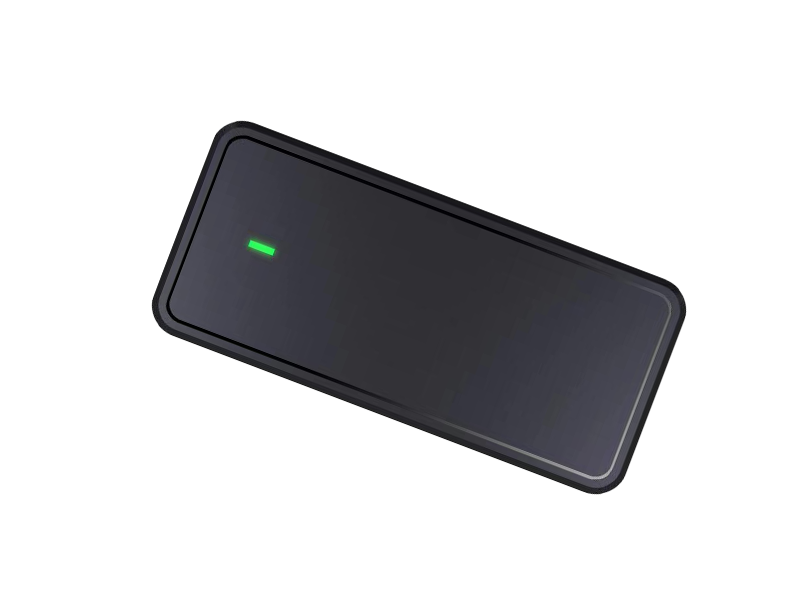 24V Lithium Battery Charger with BMS Communication SupportThis 24V charger from D-Power integrates with BMS via customizable protocols like CAN BUS, making it suitable for scooters and e-bikes while ensuring reliable smart charging.View Product →
Before specifying a charger, confirm that the communication port and protocol match your BMS. If you are unsure, ask the manufacturer for the protocol document and test report.
Yes, many chargers can operate in a default mode. But without communication, the charger cannot adapt to battery condition or receive fault warnings. For modern lithium systems, this increases safety and battery health risk.
No. CAN-Bus is excellent for high-speed, multi-node, and real-time control, while RS485 with Modbus is widely used in solar and storage systems and supports long-distance connections. The best choice depends on your BMS and system architecture.
Typical data includes maximum charge voltage, maximum charge current, temperature derating, state of charge, state of health, fault codes, charge enable, and termination command.
Many smart chargers offer dual-interface support. Check the product specification or ask the manufacturer. If not, you may need a protocol converter or a dedicated variant.
CAN-Bus and RS485 are not optional ports on a high-quality smart 24V charger. They are the communication backbone that enables the charger to work as an active partner of the battery management system. Real-time data exchange improves safety, maximizes battery life, and simplifies maintenance.
As a lithium battery charger manufacturer with a focus on smart solutions, D-Power understands this requirement. Whether you are developing an AGV, a light electric vehicle, or an industrial lithium system, a 24V charger with CAN-Bus or RS485 communication gives you the control and reliability you need.

 No.18-9 Zhang Hong Road ,Huishan District,Yanqiao Street,Wuxi City,Jiangsu Province,China
 +86-510-83138966
 [email protected]
TALK TO US
Copyright © Wuxi Dpower Electronic Co., Ltd. All Rights
Reserved.
Custom Smart Lithium Battery Charger Manufacturer