English
 Español



DPOWER ELECTRONIC
DPOWER ELECTRONIC
DPOWER ELECTRONIC
DPOWER ELECTRONIC
DPOWER ELECTRONIC
DPOWER ELECTRONIC
How the Pre-Charge Function in 36V Chargers Prevents BMS Deep Discharge Tripping
 Home / News / Industry News / How the Pre-Charge Function in 36V Chargers Prevents BMS Deep Discharge Tripping
Content
Oct 08, 2026
A 36V lithium battery pack relies on its battery management system (BMS) to keep every cell inside a safe voltage window. When the pack is stored unused, exposed to cold, or drained by a heavy load, the BMS reaches the deep discharge threshold and opens the discharge circuit. Connecting a standard charger at this point often produces a confusing result: the charger shows output, yet the battery refuses to accept current, and the BMS trips repeatedly instead of recovering. The pre-charge function in a well-designed 36V charger directly solves this problem. It is not a software trick; it is a controlled, current-limited stage that sits between connection and the moment full charging current begins.
A 36V BMS monitors each series cell group. When any cell voltage falls below the over-discharge threshold — commonly 2.5 V to 3.0 V per cell — the BMS opens its discharge MOSFET and electrically isolates the pack. The BMS control circuit stays alive, but it consumes only a tiny standby current.
Two events occur when a charger is connected. The charger's output capacitors and the BMS input capacitance charge suddenly, producing an inrush current that can reach tens of amperes. The BMS reads this spike as an overcurrent or short-circuit condition and instantly re-opens the protection MOSFET. The charger is left driving current into an open circuit, so the pack voltage never rises. The result looks like a fault, but it is actually a protection deadlock.
Key point: Neither the BMS nor the charger is necessarily defective. The pack needs a controlled low-current wake-up sequence to release the protection state.
The pre-charge function is a dedicated low-current stage implemented in the charger's power stage and control firmware. When the charger detects a terminal voltage below the normal restart threshold, it does not apply full charging voltage. Instead, it enables a current-limiting path and slowly raises the pack's voltage. A typical 36V pack is pre-charged at 200 mA to 1 A, roughly 0.05 C to 0.1 C, until the BMS recognises a valid charging condition and closes its protection MOSFET.
| Stage | Current Level | Purpose | Typical Duration |
|---|---|---|---|
| Pre-charge | 0.05 C to 0.1 C | Wake up the BMS, charge input capacitance slowly | Seconds to several minutes |
| Constant current | Rated current of the charger | Bulk charging of the pack | Until CC/CV transition voltage |
| Constant voltage | Tapering current | Final top-off and balancing | Until termination current is reached |
The pre-charge stage adds only seconds or minutes to the total charge time, but it makes the first moments of connection predictable and safe.
The protective logic inside a BMS is straightforward: if the measured current exceeds a threshold for even a few milliseconds, the MOSFET opens. Pre-charge prevents this by controlling how quickly current is allowed to rise. The sequence inside a compatible 36V charger works as follows:
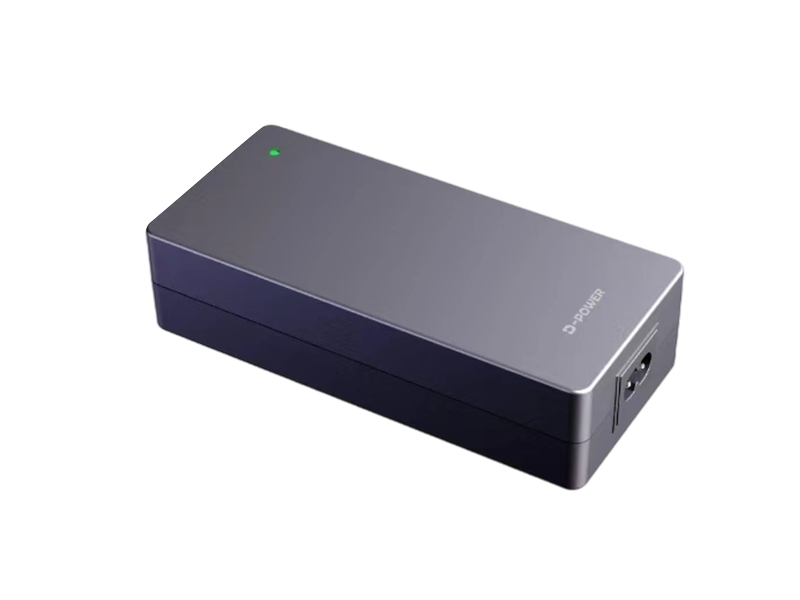 36V Lithium Battery Charger with Pre-Charge ProtectionThis charger includes a pre-charge stage that limits current rise, preventing BMS lock-up and contact arcing. It also offers reverse-polarity and thermal protection, making it suitable for safely recovering deeply discharged 36V lithium packs.View Product →
The same principle protects the charger, the connectors, and the cells. Without pre-charge, every connection is a small electrical arc event that degrades contacts and stresses the BMS sensing circuitry over time. This recovery-oriented behaviour is engineered into the 36V lithium charger series, which pairs the pre-charge stage with overvoltage, reverse-polarity, and thermal protection so that deeply discharged packs can be brought back to service repeatably and safely.
Not all pre-charge implementations are equal. These parameters determine whether a 36V charger can reliably recover a deeply discharged pack.
Generic power supplies often skip these details. For a closer look at what goes wrong, see our review of common 36V charger failure modes. Failures that appear to be charger faults are frequently triggered by a missing or poorly tuned pre-charge stage.
Deep discharge is not a rare laboratory case. It happens whenever a lithium vehicle sits unused: an electric bicycle parked over winter, a scooter fleet awaiting redistribution, an AGV stalled in a warehouse, or a drone stored with a battery left inside. In each scenario, the 36V BMS has tripped, and the charger is the only tool that can bring the pack back. A charger with a proper pre-charge stage reduces sparking, avoids BMS lock-up, and extends cell life, which translates into fewer field service calls and warranty replacements.
36V Lithium Battery Charger for Deep-Discharge RecoveryDesigned for OEM buyers, this charger family supports adjustable pre-charge profiles that work with your BMS. It helps revive batteries in scooters, e-bikes, AGVs, and drones, reducing field service calls and warranty replacements.View Product →
After recovery, the pre-charge stage hands off to a CC/CV profile that must match the cell chemistry; the setpoints described in our guide to lithium battery charging voltage matter directly for pack longevity. For OEM buyers, this is where the selection moves from a commodity adapter to a charging solution. The 36V charger product family is designed for these recovery scenarios, with pre-charge profiles that can be adjusted to the BMS in the customer's own battery pack.
Yes, in most cases. As long as the individual cell voltages are not permanently damaged, the pre-charge stage raises the pack voltage until the BMS recognises a safe charging condition and closes its protection MOSFET.
It depends on the pack state. A typical 36V pack at 0.1 C reaches the restart threshold in less than one minute, while a very deeply discharged pack may need several minutes. The charger should always stop with a fault if the threshold is not reached within the defined timeout.
No. Pre-charge is a temporary, current-limited lead-in stage that exists only until the BMS releases the protection state. Trickle charging is a continuous low-current strategy used to keep a full battery topped up over time.
A generic supply applies its full output voltage to the terminals on connection, creating an inrush current far above the BMS threshold. Only a charger with a dedicated pre-charge stage can work with the BMS instead of against it.
The pre-charge function in a 36V lithium charger is a small current value with a large operational impact. It solves one of the most common field failures in lithium systems: the deep discharge trip that blocks charging. By controlling inrush current and letting the BMS complete its own safety checks, pre-charge makes packs recoverable, predictable, and safer to operate.
When selecting a charger for a 36V battery product line, verify that pre-charge has a tunable current limit, a clear restart voltage threshold, and a safety timeout. For engineering teams that need a charger matched to a specific BMS, D-Power's 36V charger range offers customisable pre-charge and CC-CV profiles, backed by CE, UL, KC, PSE, and RCM certifications.

 No.18-9 Zhang Hong Road ,Huishan District,Yanqiao Street,Wuxi City,Jiangsu Province,China
 +86-510-83138966
 [email protected]
TALK TO US
Copyright © Wuxi Dpower Electronic Co., Ltd. All Rights
Reserved.
Custom Smart Lithium Battery Charger Manufacturer