E-Mobility Battery Charger: Powering the Future of Sustainable Transport
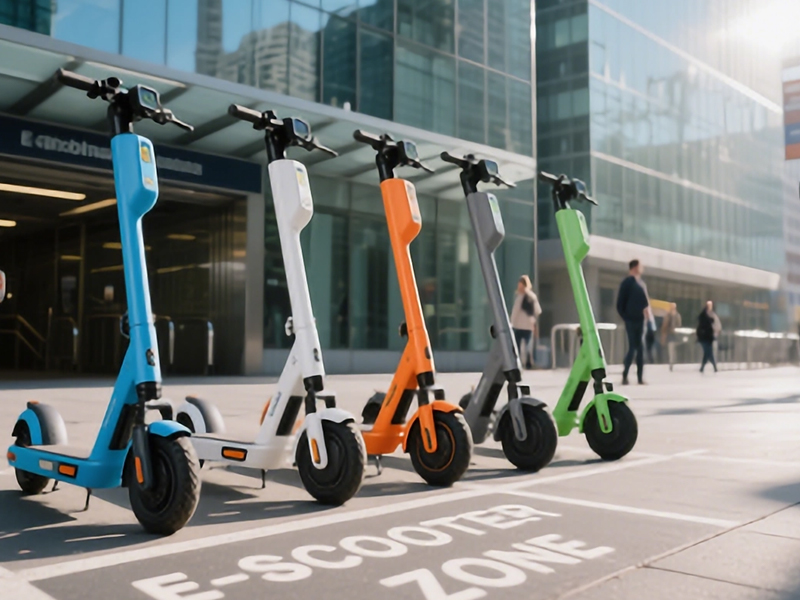
The rapid expansion of electric mobility—from e-scooters and e-bikes to electric wheelchairs and light electric vehicles—has placed the e-mobility battery charger at the center of user experience and system reliability. No longer a simple accessory, the charger is a sophisticated power electronics interface that determines charging speed, battery lifespan, operational safety, and total cost of ownership. As the e-mobility ecosystem diversifies, the demands on charging infrastructure become more complex, requiring deep technical expertise in power conversion, thermal management, and intelligent communication.
Wuxi Dpower Electronic Co., Ltd., founded in 2014 near the scenic Taihu Lake, operates at the forefront of this technology. Strategically located just 1 km from the Wuxi North highway exit—approximately 100 km from Shanghai and 30 km from Suzhou—we leverage convenient transportation and rich industrial resources. As a China-based specialist in high-end lithium battery chargers and power supplies, our solutions serve the full spectrum of e-mobility applications, including e-bikes, drones, tools, scooters, and AGVs, ensuring every e-mobility battery charger we engineer meets the highest standards of performance and reliability.
The Architecture of Modern E-Mobility Chargers
Understanding the internal architecture of an e-mobility battery charger is essential for selecting the right solution and maximizing return on investment. Today's chargers integrate multiple functional blocks that work together to deliver safe, efficient, and intelligent charging.
Power Conversion Topology
The heart of any charger is its power conversion stage, which transforms grid AC power into a controlled DC output suitable for lithium-ion batteries. Modern designs achieve efficiencies up to 92% or higher, minimizing energy waste and heat generation.
- AC-DC Stage: Typically employs a power factor correction (PFC) circuit to ensure the charger draws current cleanly from the grid, achieving PFC values as high as 0.99 at 110Vin. This reduces harmonic pollution and improves grid stability.
- DC-DC Stage: Isolates the output from the input for safety and provides precise control of voltage and current using high-frequency switching topologies like phase-shifted full bridge or LLC resonant converters.
- Output Rectification: Uses synchronous rectification with low Rds(on) MOSFETs to minimize conduction losses, especially in high-current applications above 10A.
The table below summarizes key power stage parameters for typical e-mobility charger platforms.
| Parameter |
Typical Range |
High-Performance Range |
| Input Voltage |
90-264 VAC (universal) |
90-264 VAC with PFC |
| Input Frequency |
47-63 Hz |
47-63 Hz |
| Efficiency |
85-88% |
90-94% |
| Power Factor |
0.92-0.95 |
0.98-0.99 |
| Output Voltage Range |
12-72 VDC |
Up to 86 VDC |
| Output Current |
2-10 A |
Up to 21.2 A |
Thermal Management Strategies
Heat is the enemy of electronic longevity. Effective thermal management directly impacts the reliability and lifespan of an e-mobility battery charger. Two primary approaches exist, each with distinct trade-offs.
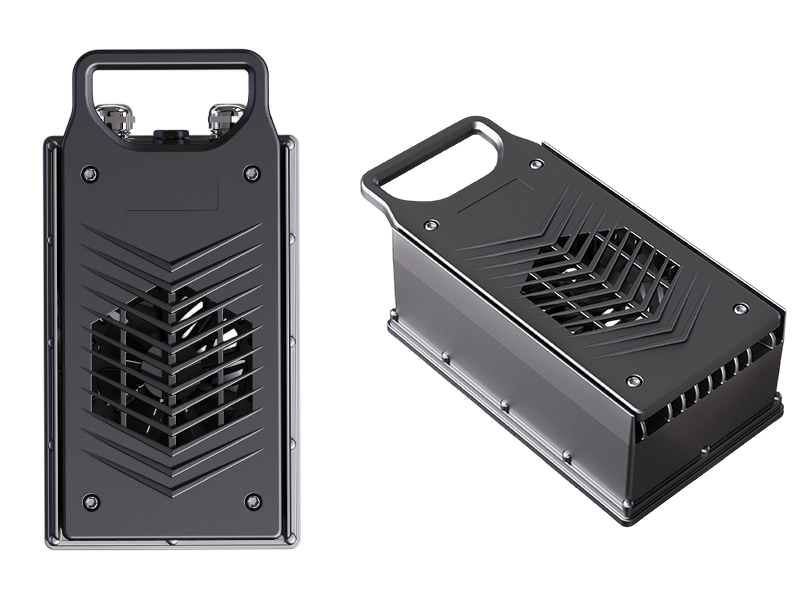
- Active Cooling (Fan-Based): Common in compact, high-power-density designs. A fan forces air over internal heatsinks. While effective for size-constrained applications, fans introduce mechanical wear, noise, and dust accumulation. Fan-cooled units typically maintain case temperatures below 60°C at 25°C ambient.
- Passive Cooling (Fanless): Utilizes the charger enclosure as a large heatsink with optimized fins and natural convection. This design achieves zero noise, higher reliability due to no moving parts, and reduced maintenance. Fanless designs are ideal for home and office environments where silence is valued.
- Advanced Thermal Interface Materials: High-quality chargers use thermally conductive gap fillers and phase-change materials to efficiently transfer heat from critical components like MOSFETs and transformers to the enclosure.
Intelligent Communication and Charging Protocols
Modern e-mobility batteries contain sophisticated Battery Management Systems (BMS) that monitor cell states and enforce safety limits. An intelligent e-mobility battery charger communicates with the BMS to optimize the charging process and provide real-time data.
CC/CV Charging Algorithm
All quality lithium-ion chargers implement the Constant Current / Constant Voltage (CC/CV) algorithm, which is essential for lithium battery health and safety.
- Constant Current (CC) Phase: The charger delivers a regulated current while the battery voltage rises. This is the bulk charging stage, where the battery receives most of its energy rapidly.
- Constant Voltage (CV) Phase: Once the battery reaches its absorption voltage (e.g., 42.0V for a 36V nominal pack), the charger maintains constant voltage while the current gradually tapers down, preventing overcharging.
- Termination: Charging ends when the current drops to a predetermined threshold (typically 5-10% of the rated current), ensuring full saturation without stressing cells.
Digital Communication Protocols
Advanced e-mobility battery chargers support digital communication with the BMS to enable dynamic control and data exchange. The choice of protocol depends on the application complexity and required features.
- UART (Universal Asynchronous Receiver/Transmitter): A simple, low-cost point-to-point protocol used in many e-bikes and scooters. It transmits basic parameters like voltage, current, temperature, and fault codes.
- CAN Bus (Controller Area Network): The industry standard for automotive and industrial applications. CAN provides robust, noise-immune communication and supports complex networks with multiple nodes. Standards like CANopen and SAE J1939-21 define application layers for charger control.
- High-Level Communication (HLC): For advanced applications, protocols like ISO 15118 enable power line communication (PLC) over the control pilot, supporting features like Plug & Charge and smart charging based on grid conditions.
The table below compares common communication protocols used in e-mobility charging.
| Protocol |
Typical Applications |
Data Rate |
Key Features |
| UART (custom) |
E-bikes, scooters, tools |
9.6-115.2 kbps |
Simple, cost-effective, point-to-point |
| CAN (CANopen, J1939) |
AGVs, industrial, high-end e-bikes |
250 kbps - 1 Mbps |
Robust, multi-node, deterministic |
| PLC (ISO 15118) |
EV charging, future e-mobility |
Up to 10 Mbps |
Plug & Charge, grid integration, smart charging |
Safety Standards and Compliance
Safety is the non-negotiable foundation of any e-mobility battery charger. Recognized standards ensure that chargers undergo rigorous testing to protect users and property. Compliance with these standards is often mandatory for market access in regions like North America and Europe.
Key Safety Certifications
- UL 60335-2-29: The standard for household and similar electrical appliances, specifically for battery chargers. It covers electrical and mechanical safety, abnormal operation, and component requirements for chargers rated up to 250V.
- UL 2849: Addresses the electrical systems of e-bikes, including the charger, battery, and drive unit. It includes temperature tests, overcharging tests, and ingress protection verification.
- UL 2272: Applies to personal e-mobility devices like hoverboards and e-scooters, covering the entire electrical system, including the charger interface.
- IEC 61851: The international standard for conductive charging systems, defining communication and safety requirements for EV chargers.
- UL 2594: Specifically for Electric Vehicle Supply Equipment (EVSE), focusing on user safety, grounding, insulation, and electromagnetic compatibility
Critical Safety Tests
To achieve certification, an e-mobility battery charger must pass a battery of rigorous tests simulating real-world conditions and fault scenarios.
- Overcharging Test: Evaluates the charger's ability to withstand an overcharge condition under single-fault scenarios. The device is charged to 110% of maximum voltage or until temperatures stabilize .
- Temperature Test: Components are tested to ensure they remain within their temperature ratings during maximum charge and discharge in a heated chamber.
- Ingress Protection (IP) Test: Verifies the enclosure's ability to resist water and dust ingress as specified (e.g., IP54, IP65)
- Dielectric Strength Test: Applies high voltage between the input and output to ensure insulation integrity.
- Fault Condition Tests: Includes short circuit, component failure, and abnormal operation simulations to ensure no fire or shock hazard.
The table below summarizes essential safety standards and their scope.
| Standard |
Scope |
Key Requirements |
| UL 60335-2-29 |
Battery chargers for household use |
Electrical safety, abnormal tests, cand omponent requirements |
| UL 2849 |
E-bike electrical systems |
Temperature, overcharge, ingress, drop tests |
| UL 2272 |
Personal e-mobility devices |
Entire device safety, including charger interface |
| IEC 61851 |
Conductive charging systems |
Communication, safety, and control pilot |
| UL 2594 |
EVSE (Electric Vehicle Supply Equipment) |
Grounding, EMI, and mechanical strength |
Application-Specific Considerations
Different e-mobility applications impose unique requirements on the charging system. Understanding these nuances ensures optimal charger selection and integration.
Micromobility (E-Bikes, E-Scooters)
- Voltage Platforms: Common nominal voltages include 24V, 36V, and 48V, with corresponding charge voltages of 29.4V, 42.0V, and 54.6V.
- Form Factor: Compact, lightweight designs are preferred for portability. Many users carry chargers with them.
- Connectors: Barrel connectors (5.5x2.1mm, 5.5x2.5mm), XLR, and proprietary brand-specific connectors are common. Quality connectors feature gold-plated contacts and strain relief.
- User Interface: Simple LED status indication (red charging, green complete) is typical, though some premium models include LCDs showing voltage, current, and charge time.
Industrial and Commercial (AGVs, Forklifts, Floor Cleaners)
- Higher Power Levels: Current requirements often exceed 20A, demanding robust connectors and thermal management.
- CAN Bus Communication: Essential for integration with fleet management systems and for executing complex charging profiles based on battery state of health.
- Rugged Enclosures: Industrial environments often require IP65 or higher ratings to resist dust, water, and cleaning chemicals
- Opportunity Charging: Frequent top-up charging during short breaks demands chargers designed for high duty cycles and rapid communication handshaking.
Specialty Applications (Electric Wheelchairs, Mobility Aids)
- Medical-Grade Safety: Compliance with medical electrical safety standards (IEC 60601-1) may be required, including low leakage current and enhanced isolation.
- Silent Operation: Fanless designs are strongly preferred to avoid disturbing users in healthcare settings.
- Battery Preservation: Charging algorithms that prioritize long cycle life over raw speed are critical for expensive medical batteries.
Customization and OEM Solutions
Many e-mobility manufacturers require custom chargers tailored to their specific battery systems, brand identity, and operational needs. A flexible approach to customization enables seamless integration and market differentiation.
Customization Parameters
- Electrical Specifications: Custom voltage setpoints, current profiles, and communication protocols matched to the specific BMS.
- Mechanical Design: Custom enclosure colors, branding (logos, labels), and connector placement. Mold modifications for unique form factors are possible with sufficient volume.
- Connector Types: Selection from a wide range of industry-standard or proprietary connectors, including magnetic options and those with locking mechanisms .
- User Interface: Custom LED patterns, segment displays, or even Bluetooth connectivity for mobile app integration.
- Cable Management: Custom cable lengths, strain relief designs, and storage solutions.
The table below outlines typical customization options and associated considerations.
| Customization Area |
Options Available |
Typical MOQ |
| Output voltage/current |
Fine-tuned to specific battery chemistry (LFP, NMC, LTO) |
100 units |
| Communication protocol |
UART, CAN (customizable baud rate, message format) |
Sample stage |
| Enclosure color/logo |
Pantone matching, pad printing, and injection-molded logos |
500 units |
| Connector |
Brand-specific, magnetic, locking, with signal pins |
200 units |
| Input plug type |
US, EU, UK, AU, China, universal |
500 units |
| Cable length |
Custom lengths from 0.5m to 3m or more |
200 units |
FAQ: E-Mobility Battery Charger
What is the difference between a standard charger and a smart charger for e-mobility?
A standard e-mobility battery charger typically applies a fixed CC/CV profile and stops when the current drops. A smart charger incorporates a microcontroller that communicates with the battery's BMS via protocols like UART or CAN. This communication allows the charger to receive real-time data on cell voltages, temperatures, and state of charge. The charger can then dynamically adjust its output—for example, reducing current if cells are imbalanced or too hot. Smart chargers also enable diagnostics, charge logging, and can initiate cell balancing at the end of charge, extending overall battery life. For modern e-mobility applications with sophisticated BMS, a smart charger is highly recommended for optimal performance and safety.
Can I use a faster charger (higher amperage) on my e-bike or scooter?
You can use a higher amperage e-mobility battery charger only if the battery's BMS is rated to accept that higher current. The battery specifications or BMS documentation will indicate the maximum charge current (e.g., "max charge current: 5A"). If you connect an 8A charger to a battery with a 5A max rating, the BMS should—in a properly designed system—limit the current or shut down to protect the cells. However, some lower-quality BMS may not enforce this limit, risking overheating and damage. Additionally, consistently charging at the maximum rated current generates more heat and can accelerate battery aging compared to charging at a moderate rate. It is safest to use the charger current recommended by the battery manufacturer.
What certifications should I look for in a safe e-mobility charger?
For North America, look for UL certification, particularly UL 60335-2-29 (battery chargers) and, if applicable, UL 2849 for e-bike systems or UL 2272 for personal e-mobility devices. For Europe, the CE mark indicates compliance with relevant directives, but specific safety testing to EN 60335-2-29 is essential. International certification to IEC 60335-2-29 provides a strong foundation. Additionally, certifications for environmental resistance (e.g., IP rating), electromagnetic compatibility (FCC, EN 55032 Class B), and functional safety (e.g., UL 1998 for software) indicate a higher-quality product. Always verify that the charger's certifications are current and valid for the intended market.
How do I choose the right connector for my e-mobility charger?
Connector selection depends on the application's electrical and mechanical requirements. Key factors include current rating (ensure contacts are rated for the maximum charge current), voltage rating, and the need for signal pins for communication. For high-vibration environments like scooters, locking connectors are recommended. Ingress protection is critical—connectors for outdoor use should be at least IP64. For high-current applications (>10A), connectors with separate power and signal contacts are essential to avoid voltage drop affecting communication. Many manufacturers now prefer custom or semi-proprietary connectors to ensure only compatible chargers are used, enhancing safety and preventing misuse.
What is the typical lifespan of an e-mobility battery charger?
A high-quality e-mobility battery charger, built with premium components like Japanese electrolytic capacitors (rated for 5000+ hours at 105°C) and robust semiconductors, can last 3 to 5 years or longer in typical use. Key factors affecting lifespan include operating temperature (high heat accelerates aging), input power quality (surge stress components), and mechanical stress on cables and connectors. Fanless designs often outlast fan-cooled units because they eliminate the most common failure point—the fan motor. Regular inspection for cable damage and keeping the charger clean and well-ventilated will maximize its operational life.
Is it safe to leave my e-mobility charger plugged in after the battery is full?
Modern, certified e-mobility battery chargers are designed to automatically stop charging when the battery is full. They enter a standby mode, drawing negligible power (often <0.5W). However, as an extra safety precaution, it is advisable to unplug the charger from the mains when not in use for extended periods. This eliminates any risk, however small, from power surges or a rare component failure while unattended. It also prevents any possibility of the charger being accidentally knocked or damaged while still connected to power. Always follow the manufacturer's recommendations in the user manual.


 English
  Español





 Watch Our Video


 No.18-9 Zhang Hong Road ,Huishan District,Yanqiao Street,Wuxi City,Jiangsu Province,China
 +86-510-83138966
